Wednesday 18 November, 18:00

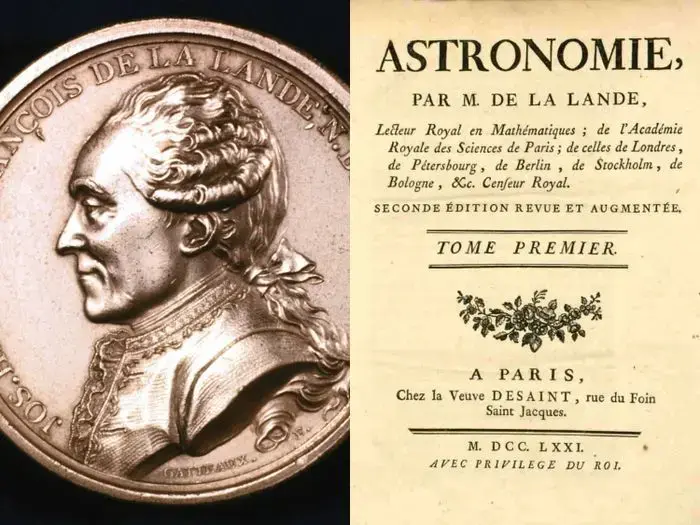
Jérôme Lalande and the Enlightenment

Philippe Lebrun, trained at the École des Mines and Caltech, worked on major accelerator projects at CERN and led international scientific collaborations. His long interest in the history and philosophy of science informs this lecture.

The session examines Jérôme Lalande’s scientific achievements and intellectual influence across the Enlightenment, from astronomy and navigation to popular science and the metric system. It also places his work in broader debates of the period, highlighting original documents and the legacy of a scholar whose impact reached far beyond astronomy.
Rue de Lausanne 128,
1202 Genève
{"title":"J\u00e9r\u00f4me Lalande and the Enlightenment","description":"\u003Cp\u003EPhilippe Lebrun, trained at the \u00c9cole des Mines and Caltech, worked on major accelerator projects at CERN and led international scientific collaborations. His long interest in the history and philosophy of science informs this lecture.\u003C\/p\u003E\u003Cp\u003EThe session examines J\u00e9r\u00f4me Lalande\u2019s scientific achievements and intellectual influence across the Enlightenment, from astronomy and navigation to popular science and the metric system. It also places his work in broader debates of the period, highlighting original documents and the legacy of a scholar whose impact reached far beyond astronomy.\u003C\/p\u003E","start_date":"2026-11-18","end_date":"2026-11-18","date":"Wednesday 18 November, 18:00","timings":[{"timing_start_date":"20261118T170000Z","timing_end_date":"20261118T180000Z"}]}
Photo Credit: MHNG

You might also like

2 – 6 November

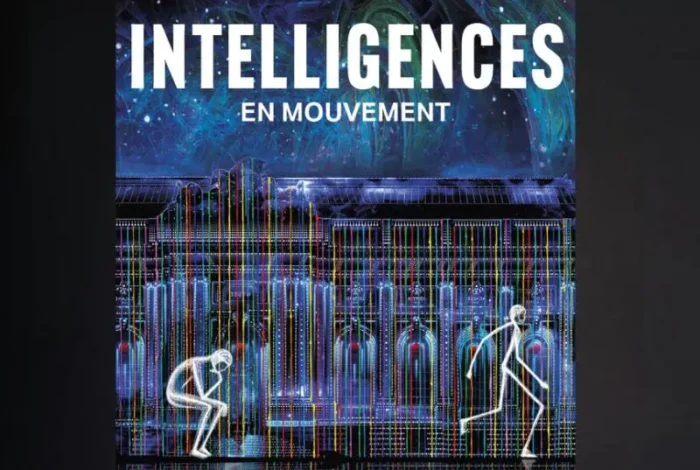
Wright Colloquium 2026 brings together interdisciplinary inquiry to rethink what we call intelligence. The program examines intelligence across scales — from artificial systems and ant colonies to neurons and engrams — and considers cognitive, neurological and philosophical perspectives. Participants will explore how different forms of intelligence shape societies, knowledge and our worldviews, with discussions, panels and workshops aimed at advancing conceptual and practical understanding.

In French and in English.

29 – 31 October

This second edition of Matières inflammables places contemporary writing at the centre. Over three days, five new plays by today’s authors are presented in staged readings directed by contemporary directors and performed by powerful actors. The programme explores unheard texts—unpublished or rarely staged—using theatre as an echo chamber for political, visceral and joyful perspectives. Additional formats include Mets sur haut-parleur, a haunted café for conversation, and a closing party.

In French.

12 October – 1 November

Christoffer Ellegaard, artist and illustrator born in 1988 in Elsinore (Denmark) and based in Geneva, trained at the HEAD and the Hochschule Luzern. His drawing and painting practice is recognised for the finesse of its line and the poetry of its images; he exhibits in Switzerland and internationally and regularly publishes illustrated books.

This workshop invites participants and the public to explore body and character through exercises and experiments. Each participant makes a head, a torso and legs that can be freely combined to give life to a multitude of surprising hybrid characters.

30 October – 8 November

Founded in 1995, the Geneva International Film Festival (GIFF) is one of Geneva’s longest-standing cinema festivals and among the first in the world to integrate television into its programming. A hub for experimentation, encounters, and celebration, the ten-day festival presents films, series, and immersive audiovisual experiences to some 35,000 visitors each year. GIFF also hosts the Geneva Digital Market, Switzerland’s only meeting point for professionals in innovation and audiovisual content, and maintains year-round activities including school programmes and GIFF UNLIMITED events. Recognized as a key driver of Switzerland’s audiovisual sector, GIFF combines artistic ambition with international reach.

22 September – 15 December

The Department of Ancient Studies at the Faculty of Humanities (UNIGE) is offering a series of public lectures dedicated to interactions, exchanges, and cultural dynamics in the ancient world. Faculty members and researchers will explore diplomatic relations, the movement of objects, religious and linguistic influences, and issues of identity at the crossroads of the Mediterranean and the ancient Near East.

In French.

30 – 31 October

This tasting session examines how glass design influences the perception of aromas and the typicity of beverages. It explores the relationship between shape, volume, and surface interaction, and how these factors reveal or mute specific scent and flavor notes. Participants investigate sensory mechanisms behind olfactory focus, comparative tasting protocols, and practical considerations for pairing glassware with different drink styles. The presentation emphasizes learning through guided tasting and sensory analysis.

In French.

Oops! It seems there
are no events matching your selection!

Please adjust your criteria to see more results.

Password was reset

Your password has been reset successfully. You can now log in with your new password.

Check your Inbox

We’ve sent you a password reset email to the address provided. Please check your inbox and/or spam folder.

Thank you!

Please check your inbox for a verification email to complete your sign-up.

Newsletter

Culture, curated weekly.

Add to Calendar

Select the date to be saved in your Google calendar.

calendar placeholder

Done!

Event removed from your CoolAgenda.

Yeah!

Event Saved to your CoolAgenda

Add to CoolAgenda

In your CoolAgenda

Date

Title

Location

Description

calendar placeholder

Reset password

Forgot your password?

Sign Up

Create your Account and Culture Up!