


Housed in a striking 1970s concrete building in the heart of Geneva, Uni Dufour is one of the main buildings of the University of Geneva (UNIGE). It frequently serves as a venue for conferences, round tables, and events focused on a wide range of research topics.

The Department of Ancient Studies at the Faculty of Humanities (UNIGE) is offering a series of public lectures dedicated to interactions, exchanges, and cultural dynamics in the ancient world. Faculty members and researchers will explore diplomatic relations, the movement of objects, religious and linguistic influences, and issues of identity at the crossroads of the Mediterranean and the ancient Near East.
In French.
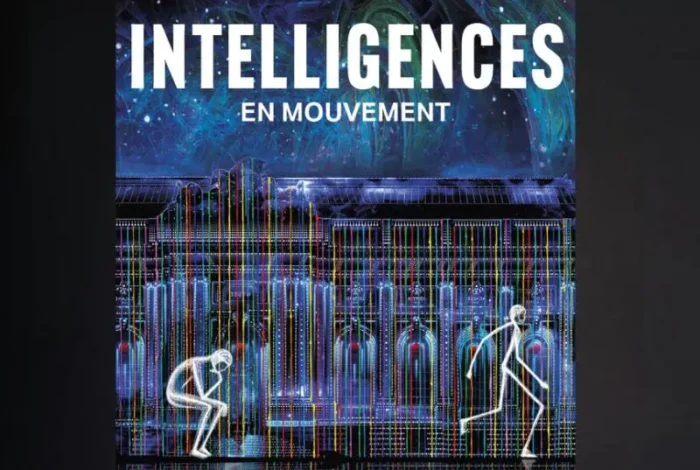
Wright Colloquium 2026 brings together interdisciplinary inquiry to rethink what we call intelligence. The program examines intelligence across scales — from artificial systems and ant colonies to neurons and engrams — and considers cognitive, neurological and philosophical perspectives. Participants will explore how different forms of intelligence shape societies, knowledge and our worldviews, with discussions, panels and workshops aimed at advancing conceptual and practical understanding.
In French and in English.
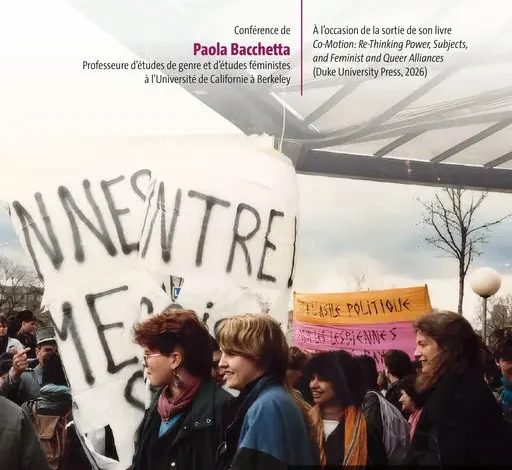
Paola Bacchetta, professor at the University of California, Berkeley, presents the core arguments of her forthcoming book Co‑Motion: Re‑Thinking Power, Subjects, and Feminist and Queer Alliances (Duke University Press, 2026). Drawing on feminist and queer scholarship, Bacchetta revisits debates from the 8th International Lesbian Information Service conference and examines how power, subject formation and alliances are produced and transformed. The talk situates historical reflections within contemporary theory to offer new conceptual tools for activists and scholars.
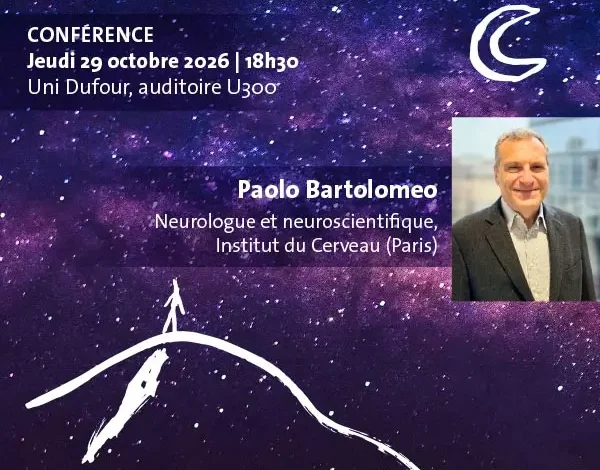
Paolo Bartolomeo presents a lecture on the links between brain activity, attention and consciousness. Drawing on clinical observations and experimental neuroscience, the talk examines the role of large-scale brain networks, the contributions of both cerebral hemispheres and the main theories of consciousness, evaluating their insights and limitations. The session aims to clarify how neural mechanisms relate to conscious experience and to highlight open questions for research and clinical practice.
In French.
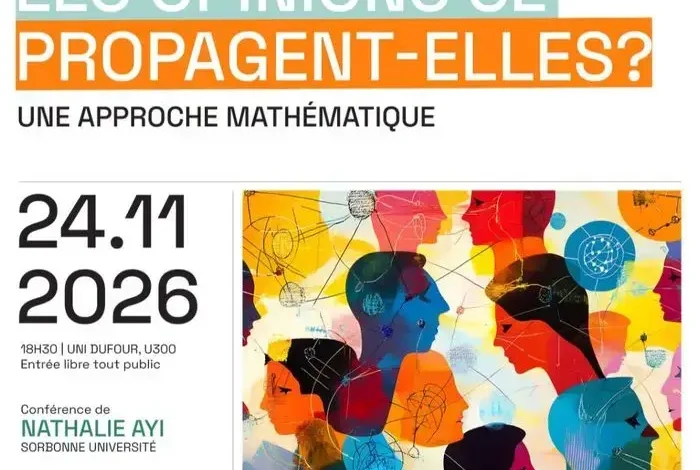
Nathalie Ayi explores how social interactions shape collective thinking, from consensus to polarization. Her talk draws on mathematical tools to examine opinion dynamics across groups and the mechanisms that influence how ideas circulate.
She investigates graph theory and equations to model the evolution of opinions within a population, showing how these frameworks can help explain large-scale phenomena such as consensus formation and polarization.
In French.
Your password has been reset successfully. You can now log in with your new password.
We’ve sent you a password reset email to the address provided. Please check your inbox and/or spam folder.
Please check your inbox for a verification email to complete your sign-up.
Culture, curated weekly.
Event removed from your CoolAgenda.

