Tuesday 3 November, 18:30

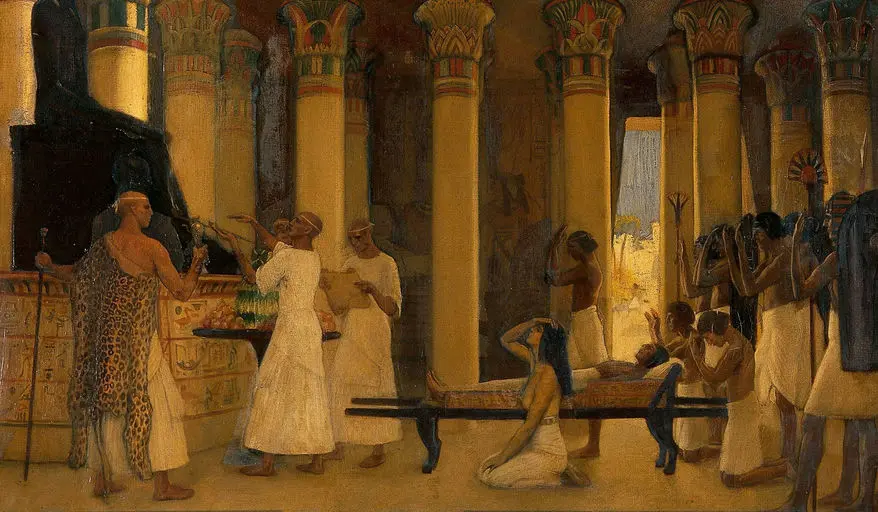
Medicine Through the Centuries: Egypt’s Greatest Gift to Humanity

Dr George Garibaldi, psychiatrist and researcher, brings clinical and scholarly expertise on the history of medicine. He examines the evolution of medical knowledge from ancient Egypt to modern practice, tracing innovations in diagnosis, therapeutic techniques and medical philosophy. The lecture explores how ancient Egyptian contributions shaped anatomical knowledge, surgical methods and medical ethics, and considers their enduring influence on later traditions and scientific inquiry.

In French.
Rue de Fribourg 5,
Geneva, Switzerland
{"title":"Medicine Through the Centuries: Egypt’s Greatest Gift to Humanity","description":"\u003Cp\u003EDr George Garibaldi, psychiatrist and researcher, brings clinical and scholarly expertise on the history of medicine. He examines the evolution of medical knowledge from ancient Egypt to modern practice, tracing innovations in diagnosis, therapeutic techniques and medical philosophy. The lecture explores how ancient Egyptian contributions shaped anatomical knowledge, surgical methods and medical ethics, and considers their enduring influence on later traditions and scientific inquiry.\u003C\/p\u003E\u003Cp\u003E\u003Cstrong\u003EIn French.\u003C\/strong\u003E\u003C\/p\u003E","start_date":"2026-11-03","end_date":"2026-11-03","date":"Tuesday 3 November, 18:30","timings":[{"timing_start_date":"20261103T173000Z","timing_end_date":"20261103T193000Z"}]}
Photo Credit: DR

You might also like

3 – 11 October

The Albert Hirschman Centre on Democracy is pleased to invite you to Democracy Week 2026, a series of public events organised in collaboration with the Geneva Chancellery of State. Bringing together academics, policymakers, journalists, civil society actors and the wider public, this initiative creates a space for dialogue on the opportunities and challenges facing democracy today.

Thursday 8 October, 18:30

Organised in honour of the late Professor Carlo Ginzburg, this panel brings together scholars to examine his contribution to microhistory, the evidential paradigm, and the recovery of marginalised voices. Marie‑Laure Salles opens the session; Martin Rueff delivers the keynote; a roundtable moderated by Salles features Rueff, Stella Ghervas, Jan Kiely and Awet Weldemichael, followed by public questions. The discussion reflects on Ginzburg’s philological methods and their impact on historical practice.

In French and English.

Thursday 8 October, 18:00

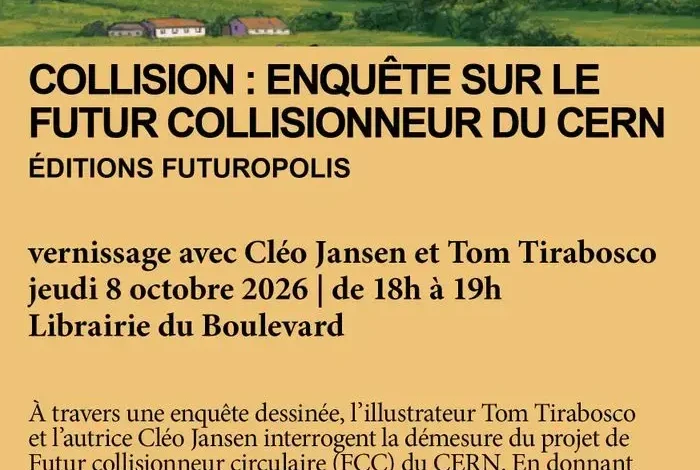
Tom Tirabosco, illustrator, and Cléo Jansen, author, present a drawn investigation into the proposed Future Circular Collider, combining reportage and visual narrative to examine the project’s scope and purpose.

Through interviews with engineers, economists, residents and opponents, the session examines tensions between the race for scientific knowledge and planetary limits, exploring governance, ethical trade-offs and the ecological implications for the region, and discusses options for public deliberation, accountability, and alternative research models.

In French.

Thursday 8 October, 19:00

Caroline Fourest appears in conversation and debate, offering insight into contemporary public debates and media discourse. The session, moderated by Jérémy Seydoux, examines themes such as pluralism, secularism and the role of journalism in democratic societies. Through questions and exchange, Fourest discusses the challenges of public engagement and the balance between freedom of expression and social responsibility. Discussion.

In French.

22 September – 15 December

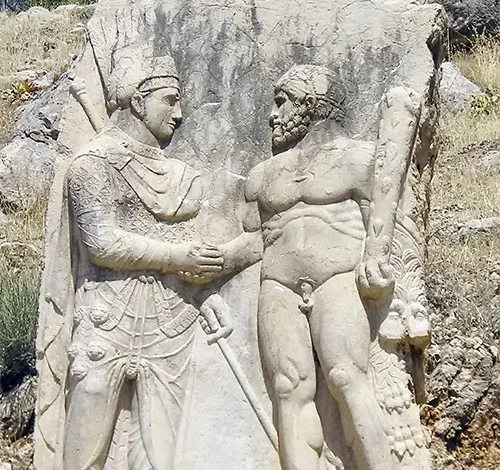
The Department of Ancient Studies at the Faculty of Humanities (UNIGE) is offering a series of public lectures dedicated to interactions, exchanges, and cultural dynamics in the ancient world. Faculty members and researchers will explore diplomatic relations, the movement of objects, religious and linguistic influences, and issues of identity at the crossroads of the Mediterranean and the ancient Near East.

In French.

Thursday 8 October, 18:15

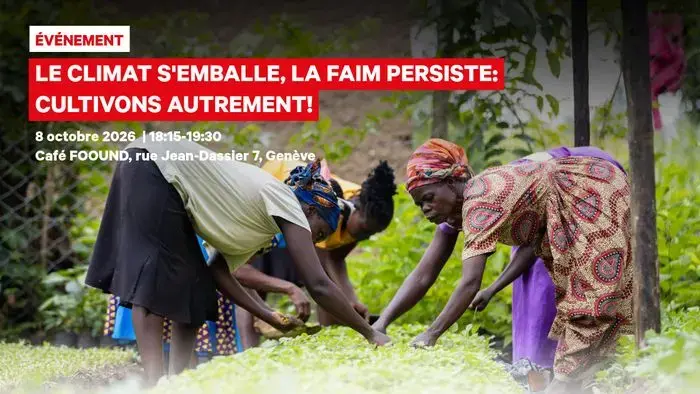
Speakers include the coordinator of Action de Carême’s Kenya programme and analysts behind the Sufosec Alliance’s 2026 World Food Report, combining frontline experience and large-scale household data to assess agroecology’s impacts.

This session examines how agroecology addresses hunger and the climate crisis by evaluating food-security outcomes, highlighting women’s central role in agriculture, and presenting testimonies from field practitioners. It also discusses the United Nations Declaration on the Rights of Peasants (UNDROP) as a rights-based framework for sustaining these transformations.

Oops! It seems there
are no events matching your selection!

Please adjust your criteria to see more results.

Password was reset

Your password has been reset successfully. You can now log in with your new password.

Check your Inbox

We’ve sent you a password reset email to the address provided. Please check your inbox and/or spam folder.

Thank you!

Please check your inbox for a verification email to complete your sign-up.

Newsletter

Culture, curated weekly.

Add to Calendar

Select the date to be saved in your Google calendar.

calendar placeholder

Done!

Event removed from your CoolAgenda.

Yeah!

Event Saved to your CoolAgenda

Add to CoolAgenda

In your CoolAgenda

Date

Title

Location

Description

calendar placeholder

Reset password

Forgot your password?

Sign Up

Create your Account and Culture Up!