Wednesday 4 November, 18:00

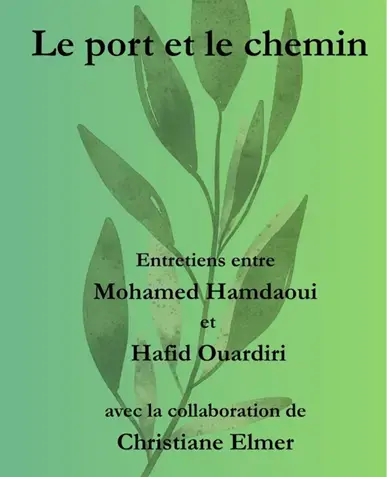
Meeting with Mohamed Hamdaoui and Hafid Ouardiri at ICAM-L’Olivier

Two men from Algeria, one a believing and practising Muslim and the other shaped by Islamic culture yet deeply secular, engage in an open conversation about the challenges facing Muslim identity in contemporary Swiss society. Their exchange examines faith, belonging, and the tension between religious practice and secular life. Rather than becoming a dead-end clash, the discussion opens moments of hope and offers a nuanced view of the Islamic world, far removed from familiar stereotypes.

Rue de Fribourg 5,
Geneva, Switzerland
Photo Credit: DR
{"title":"Meeting with Mohamed Hamdaoui and Hafid Ouardiri at ICAM-L’Olivier","description":"\u003Cp\u003ETwo men from Algeria, one a believing and practising Muslim and the other shaped by Islamic culture yet deeply secular, engage in an open conversation about the challenges facing Muslim identity in contemporary Swiss society. Their exchange examines faith, belonging, and the tension between religious practice and secular life. Rather than becoming a dead-end clash, the discussion opens moments of hope and offers a nuanced view of the Islamic world, far removed from familiar stereotypes.\u003C\/p\u003E","start_date":"2026-11-04","end_date":"2026-11-04","date":"Wednesday 4 November, 18:00","timings":[{"timing_start_date":"20261104T170000Z","timing_end_date":"20261104T190000Z"}]}
Photo Credit: DR

You might also like

28 January – 23 December

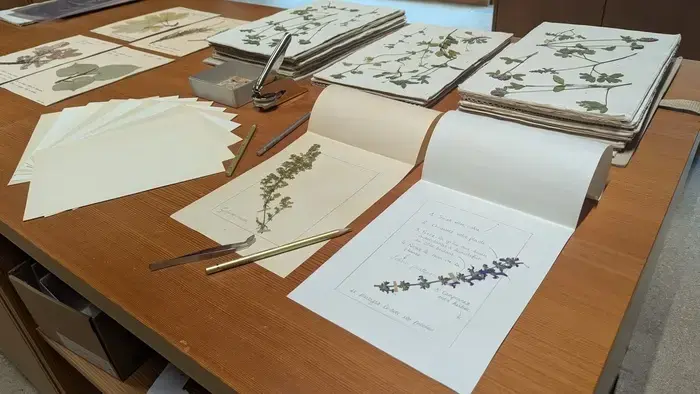
This workshop explores the traditional process of assembling a herbarium specimen, inspired by Jean-Jacques Rousseau’s collections. Participants learn scientific techniques for pressing and mounting dried plants on old paper, practice botanical labelling and nomenclature, and select specimens to create a personal herbarium sheet. The session examines preservation methods, identification principles and the historical context of Rousseau’s approach, combining practical skills with scientific insight to produce a lasting botanical object.

In French.

14 October – 4 November

Front Row, founded in 2023 by Tara Mabiala and Camille Farrah Buhler, develops a curatorial and editorial practice around fashion, producing events, interviews and archival projects and was awarded the 2024 Swiss Design Award.

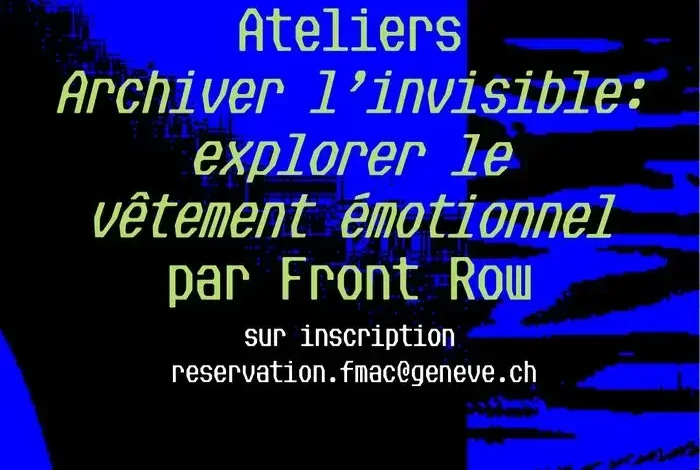
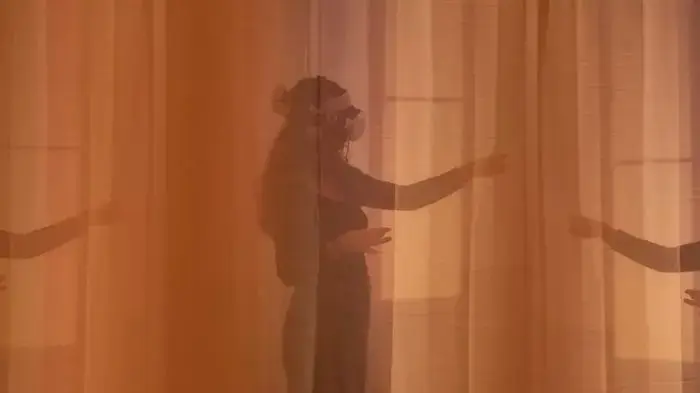
This two-part workshop invites participants to bring an emotionally significant garment and to document its traces—wear, stains, labels, memories—through image, text, drawing, video, collage and movement. The group then reflects on collective archiving and devises forms of public restitution based on participants’ intentions.

In French.

28 January – 4 November

Leonor Cuahonte, PhD in Art History, leads a five-lecture series on modern and contemporary art, with research focusing on twentieth‑century movements and gender in art.

Across five sessions she examines the movements that birthed modernity, profiles pivotal artists from Matisse to Warhol, and investigates the rising recognition of women artists from Frida Kahlo onward, revealing thematic continuities and shifts in style and cultural significance.

Dates & Topics:
Tuesday 28 January, 19:00 – Art Nouveau – Art Deco
Tuesday 25 March, 19:00 – Elles – Women Painters, Sculptors, Architects
Tuesday 6 May, 19:00 – Pop Art Icons – Warhol, Koons, and Hockney
Tuesday 16 September, 19:00 – 100 Years Ago – Matisse, Mondrian, Magritte
Tuesday 4 November, 19:00 – Frida Kahlo and the Tradition of the Day of the Dead

In French.

Wednesday 4 November, 14:30

Veronika Liebl and Jenny Thibault take part in this discussion marking 30 years of collaboration between Ars Electronica and the Société des arts technologiques (SAT). Their perspectives connect artistic experimentation, cultural innovation, and the evolving role of technology in creative practice.

The session examines how AI and digital tools are reshaping the conditions for artistic production, and asks how institutions can continue to support experimentation while anticipating the next decades of extended realities.

2 – 6 November

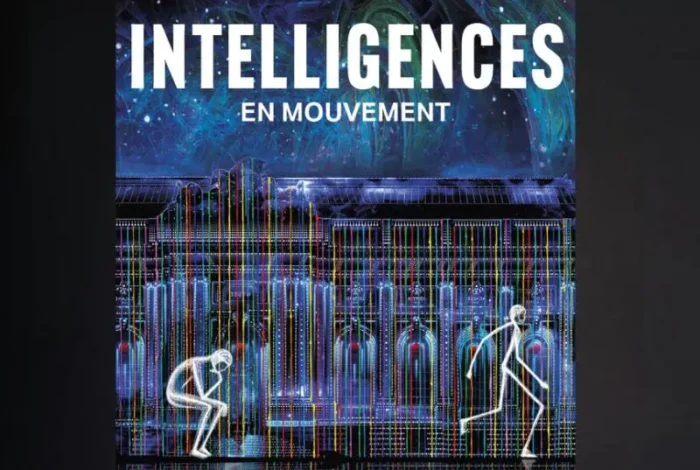
Wright Colloquium 2026 brings together interdisciplinary inquiry to rethink what we call intelligence. The program examines intelligence across scales — from artificial systems and ant colonies to neurons and engrams — and considers cognitive, neurological and philosophical perspectives. Participants will explore how different forms of intelligence shape societies, knowledge and our worldviews, with discussions, panels and workshops aimed at advancing conceptual and practical understanding.

In French and in English.

Wednesday 4 November, 18:15

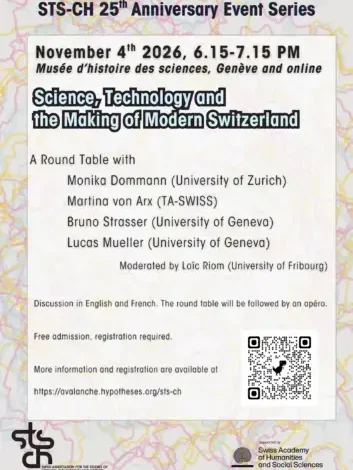
This roundtable examines how science and technology helped shape modern Switzerland’s political and technical development, while also defining its role in international relations and the global economy. It traces the importance of scientific and industrial projects from the nineteenth century onward, including the building of the federal state, the rise of industrial research, and the strengthening of Switzerland’s international standing through institutions such as CERN. The discussion also highlights how these developments informed scholarship in science and technology studies and the history of science.

Discussion in English and French.

Oops! It seems there
are no events matching your selection!

Please adjust your criteria to see more results.

Password was reset

Your password has been reset successfully. You can now log in with your new password.

Check your Inbox

We’ve sent you a password reset email to the address provided. Please check your inbox and/or spam folder.

Thank you!

Please check your inbox for a verification email to complete your sign-up.

Newsletter

Culture, curated weekly.

Add to Calendar

Select the date to be saved in your Google calendar.

calendar placeholder

Done!

Event removed from your CoolAgenda.

Yeah!

Event Saved to your CoolAgenda

Add to CoolAgenda

In your CoolAgenda

Date

Title

Location

Description

calendar placeholder

Reset password

Forgot your password?

Sign Up

Create your Account and Culture Up!