Wednesday 9 December, 18:30

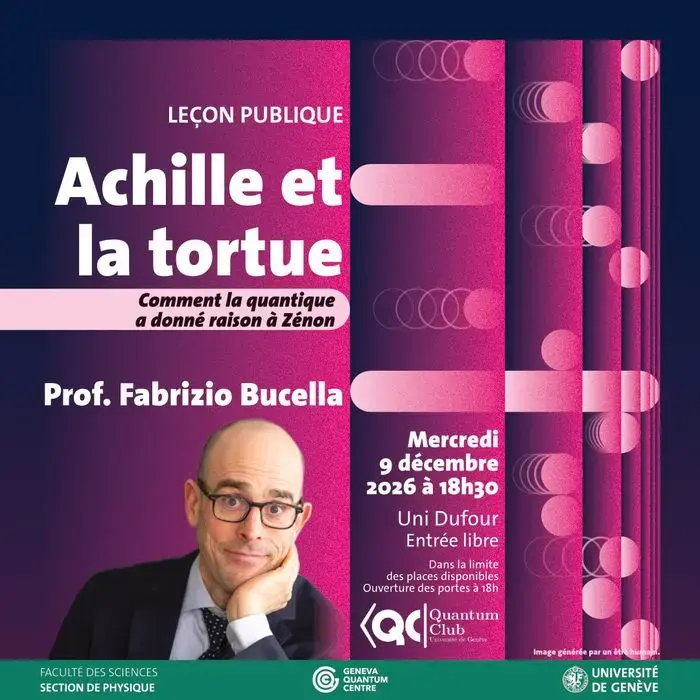
Achilles and the Tortoise

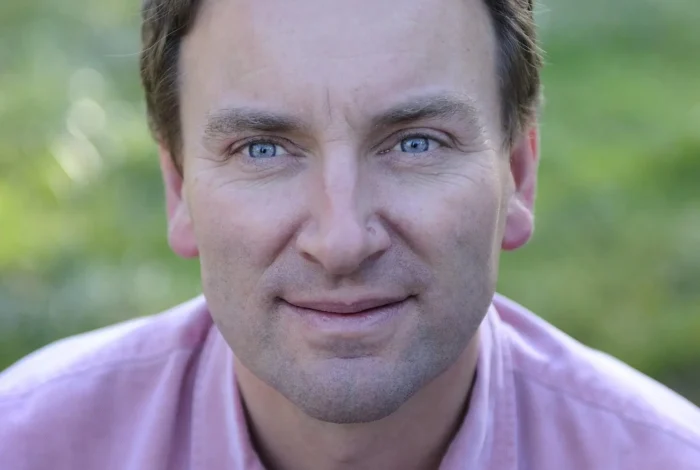
Professor Fabrizio Bucella presents a public lecture on Zeno’s famous paradoxes, examining how Achilles and the tortoise continue to challenge our intuitions about motion, distance, and time. Drawing on physics and quantum theory, he explores whether modern science can help resolve the apparent contradiction.

The talk follows the logic of the arrow paradox and related analogues, showing how seemingly simple questions can reveal deeper issues in mathematics and physics. It offers an accessible introduction to a classic philosophical problem and its contemporary scientific echoes.

In French.
Rue du Général-Dufour 24,
1204 Genève
{"title":"Achilles and the Tortoise","description":"\u003Cp\u003EProfessor Fabrizio Bucella presents a public lecture on Zeno\u2019s famous paradoxes, examining how Achilles and the tortoise continue to challenge our intuitions about motion, distance, and time. Drawing on physics and quantum theory, he explores whether modern science can help resolve the apparent contradiction.\u003C\/p\u003E\u003Cp\u003EThe talk follows the logic of the arrow paradox and related analogues, showing how seemingly simple questions can reveal deeper issues in mathematics and physics. It offers an accessible introduction to a classic philosophical problem and its contemporary scientific echoes.\u003C\/p\u003E\u003Cp\u003E\u003Cstrong\u003EIn French.\u003C\/strong\u003E\u003C\/p\u003E","start_date":"2026-12-09","end_date":"2026-12-09","date":"Wednesday 9 December, 18:30","timings":[{"timing_start_date":"20261209T170000Z","timing_end_date":"20261209T190000Z"}]}
Photo Credit: Quantum Club

You might also like

Tuesday 3 November, 18:30

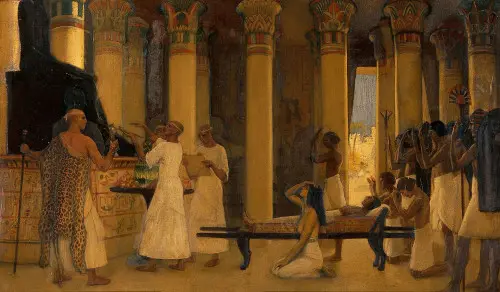
Dr George Garibaldi, psychiatrist and researcher, presents a historical study of medical knowledge from ancient Egypt to modern practice. Drawing on comparative research, he examines surgical techniques, pharmacology, diagnostic methods and the cultural frameworks that shaped early healing traditions. The lecture explores how Egyptian innovations influenced later medical systems and reveals continuities and transformations in clinical thought across centuries.

In French.

Tuesday 3 November, 11:30

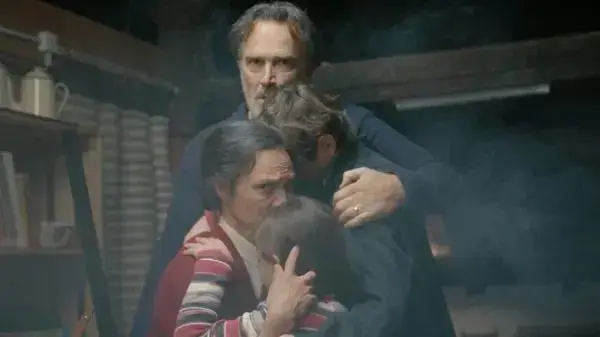
Director Romed Wyder and Ulrich Fischer of Memoways present a case study on where AI extends cinematic storytelling. Their discussion examines how audiences can continue engaging with Where Is Ava? after the screening by conversing with the film’s characters through artificial intelligence. The session reveals new narrative possibilities, while also raising questions about authorship, immersion, and the evolving relationship between cinema and interactive technology.

25 August – 3 November

Claire Rufenacht, dance therapist, Pedro Ratto, dancer, and Murielle Brunschwig, cultural mediator, bring complementary expertise in dance therapy, performance and cultural mediation to guided sessions for people with neurological conditions and their caregivers.

The workshops explore Argentine tango integrated with museum-inspired movement and sensory activities, addressing mobility, balance, expression and social connection. Sessions focus on practical movement exercises, improvisation and listening, adapted for participants with Parkinson’s, Alzheimer’s, post-stroke and other movement disorders, fostering wellbeing and mutual support.

In French.

Tuesday 3 November, 14:30

After the fall of the Berlin Wall many embraced Francis Fukuyama’s thesis of the ‘end of history’ and the final triumph of liberal order. This lecture interrogates that claim, examining how recent geopolitical upheavals and assertive power politics reshape global commerce. It explores current trade dynamics, supply-chain strategies and the emergence of hybrid economic orders, revealing how states and markets adapt. The talk highlights implications for policy, business and international cooperation.

In French.

Tuesday 3 November, 12:00

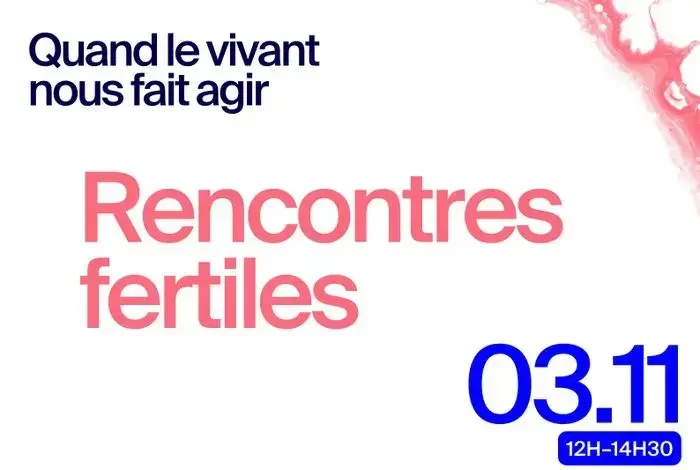
Christian Clot, explorer-researcher and founder of the Human Adaptation Institute, is a specialist in adaptive cognition and co-founder of the Climate House. He researches behavioral and transformational adaptation to new living conditions and led the Deep Time expedition.

This session examines how behaviors, decisions and social bonds change under crisis, drawing on Deep Time experiences and artistic contributions by Laurence Piaget-Dubuis. A subsequent panel explores creation by and for living beings, discussing ecological practice, collaborative art-science methods and implications for collective adaptation.

Tuesday 3 November, 08:30

Organized by the W4W association, this bilingual symposium examines ethical perspectives on water through the lens of Albert Schweitzer’s concept of ‘reverence for life’. Researchers in ethics and theology join scientists and health professionals to investigate moral responsibilities, policy implications, and interdisciplinary approaches to water stewardship. Sessions explore conceptual frameworks, practical applications in healthcare and environmental management, and pathways for integrating ethical reflection into public and professional practice.

Oops! It seems there
are no events matching your selection!

Please adjust your criteria to see more results.

Password was reset

Your password has been reset successfully. You can now log in with your new password.

Check your Inbox

We’ve sent you a password reset email to the address provided. Please check your inbox and/or spam folder.

Thank you!

Please check your inbox for a verification email to complete your sign-up.

Newsletter

Culture, curated weekly.

Add to Calendar

Select the date to be saved in your Google calendar.

calendar placeholder

Done!

Event removed from your CoolAgenda.

Yeah!

Event Saved to your CoolAgenda

Add to CoolAgenda

In your CoolAgenda

Date

Title

Location

Description

calendar placeholder

Reset password

Forgot your password?

Sign Up

Create your Account and Culture Up!