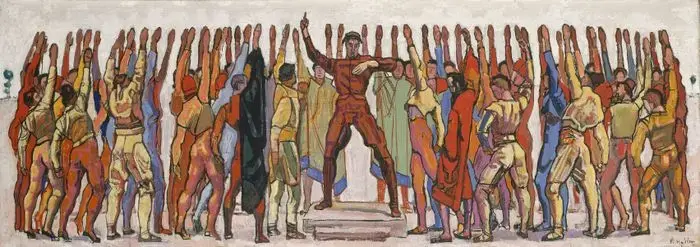
This lecture examines Ferdinand Hodler’s 1913 fresco Unanimity and the tension it encodes between collective gesture and individual conscience. Situating the work amid liberal democratic, Jacobin and authoritarian legacies, it investigates the painting’s contested reception — including its removal in 1914 — and asks whether Hodler depicted the Reformation as fostering pluralistic deliberation or critiquing enforced unanimity. By tracing links between Protestantism, republicanism and democracy, the talk shows how the Reformation served as a long-term catalyst for political controversy.
In French.