Thursday 29 October, 15:00

Requiem Aeternam: Death in Classical Music

Nicolas Bucher, director of the OCG, brings expertise in programming and performance of orchestral and choral repertoire, drawing on his professional role to situate requiem works in historical and musical contexts.

This lecture examines the theme of death in classical music, focusing on Brahms’s German Requiem and other mass settings. Bucher examines compositional language, textual choices, and liturgical traditions to reveal how requiems negotiate grief, consolation and memory, and what these works tell us about changing attitudes toward death in Western music.

In French.

Place des Trois-Perdrix 5,
1204 Genève
{"title":"Requiem Aeternam: Death in Classical Music","description":"\u003Cp\u003ENicolas Bucher, director of the OCG, brings expertise in programming and performance of orchestral and choral repertoire, drawing on his professional role to situate requiem works in historical and musical contexts.\u003C\/p\u003E\u003Cp\u003EThis lecture examines the theme of death in classical music, focusing on Brahms\u2019s German Requiem and other mass settings. Bucher examines compositional language, textual choices, and liturgical traditions to reveal how requiems negotiate grief, consolation and memory, and what these works tell us about changing attitudes toward death in Western music.\u003C\/p\u003E\u003Cp\u003E\u003Cstrong\u003EIn French.\u003C\/strong\u003E\u003C\/p\u003E","start_date":"2026-10-29","end_date":"2026-10-29","date":"Thursday 29 October, 15:00","timings":[{"timing_start_date":"20261029T140000Z","timing_end_date":"20261029T150000Z"}]}
Photo Credit: Sébastien Moritz

You might also like

Friday 9 October, 14:30

Viewed as a Gutenberg moment of the twenty-first century, artificial intelligence is a disruptive innovation that is reshaping books and knowledge. This lecture examines how AI transforms the production and transmission of cultural and intellectual content, and how it can act as a powerful multiplier of young people’s talents. Participants will gain critical perspectives on societal implications and strategies to harness AI for rebuilding prosperity in Switzerland and Europe.

In French.

22 September – 15 December

The Department of Ancient Studies at the Faculty of Humanities (UNIGE) is offering a series of public lectures dedicated to interactions, exchanges, and cultural dynamics in the ancient world. Faculty members and researchers will explore diplomatic relations, the movement of objects, religious and linguistic influences, and issues of identity at the crossroads of the Mediterranean and the ancient Near East.

In French.

Friday 9 October, 17:30

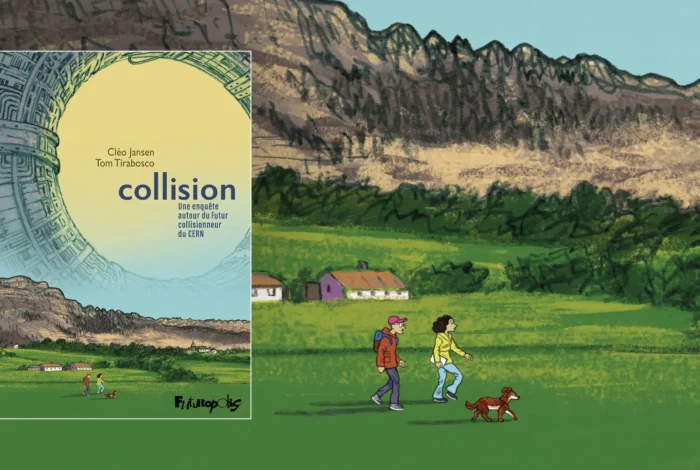
Authors Cléo Jansen and Tom Tirabosco present a probing investigation into the proposed future collider at CERN. Their book examines the scientific, ethical and societal questions raised by a project of this scale: the role of research, our relationship to technological progress and the wider environmental and social impacts. By meeting scientists, engineers, economists and philosophers, they juxtapose perspectives and invite reflection on the choices we make in the name of knowledge.

In French. Followed by a discussion.

3 – 11 October

The Albert Hirschman Centre on Democracy is pleased to invite you to Democracy Week 2026, a series of public events organised in collaboration with the Geneva Chancellery of State. Bringing together academics, policymakers, journalists, civil society actors and the wider public, this initiative creates a space for dialogue on the opportunities and challenges facing democracy today.

28 January – 23 December

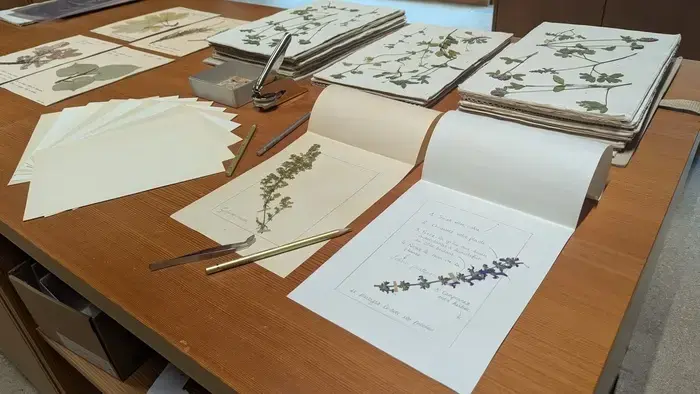
This workshop explores the traditional process of assembling a herbarium specimen, inspired by Jean-Jacques Rousseau’s collections. Participants learn scientific techniques for pressing and mounting dried plants on old paper, practice botanical labelling and nomenclature, and select specimens to create a personal herbarium sheet. The session examines preservation methods, identification principles and the historical context of Rousseau’s approach, combining practical skills with scientific insight to produce a lasting botanical object.

In French.

Saturday 10 October, 15:30

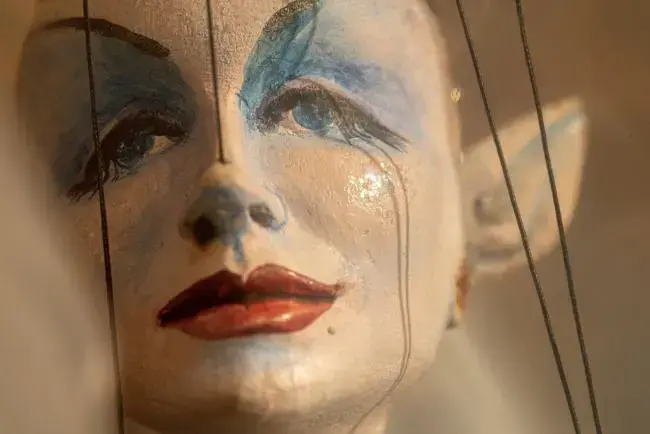
Discover a remarkable puppetry collection that reveals nearly a century of creative practice and craftsmanship. More than 1,400 objects — from traditional figures to contemporary pieces — illustrate evolving techniques, materials and aesthetics. The visit explores historical development, artistic processes and the social and cultural roles of puppetry, offering interpretive insights into conservation and exhibition approaches for diverse audiences.

In French.

Oops! It seems there
are no events matching your selection!

Please adjust your criteria to see more results.

Password was reset

Your password has been reset successfully. You can now log in with your new password.

Check your Inbox

We’ve sent you a password reset email to the address provided. Please check your inbox and/or spam folder.

Thank you!

Please check your inbox for a verification email to complete your sign-up.

Newsletter

Culture, curated weekly.

Add to Calendar

Select the date to be saved in your Google calendar.

calendar placeholder

Done!

Event removed from your CoolAgenda.

Yeah!

Event Saved to your CoolAgenda

Add to CoolAgenda

In your CoolAgenda

Date

Title

Location

Description

calendar placeholder

Reset password

Forgot your password?

Sign Up

Create your Account and Culture Up!