Thursday 11 February, 12:15

Nask Studio: Encounters and Dialogue as Drivers of Creativity

Nask (Nadja Zimmermann and Skander Najar), active for twenty years, has sustained its creativity through dialogue and the clash of ideas.

The session examines the role of encounter in creative processes as a source of meaning, high standards and humanity, exploring how dialogue shapes ideas, sets expectations and informs practice within graphic arts. It investigates themes of collaboration, critique and creative exchange, revealing insights on sustaining rigorous creative work.

In French.
Promenade des Bastions 8,
1205 Genève
Photo Credit: Nask Studio
{"title":"Nask Studio: Encounters and Dialogue as Drivers of Creativity","description":"\u003Cp\u003ENask (Nadja Zimmermann and Skander Najar), active for twenty years, has sustained its creativity through dialogue and the clash of ideas.\u003C\/p\u003E\u003Cp\u003EThe session examines the role of encounter in creative processes as a source of meaning, high standards and humanity, exploring how dialogue shapes ideas, sets expectations and informs practice within graphic arts. It investigates themes of collaboration, critique and creative exchange, revealing insights on sustaining rigorous creative work.\u003C\/p\u003E\u003Cp\u003E\u003Cstrong\u003EIn French.\u003C\/strong\u003E\u003C\/p\u003E","start_date":"2027-02-11","end_date":"2027-02-11","date":"Thursday 11 February, 12:15","timings":[{"timing_start_date":"20270211T111500Z","timing_end_date":"20270211T120000Z"}]}
Photo Credit: Nask Studio

You might also like

22 September – 15 December

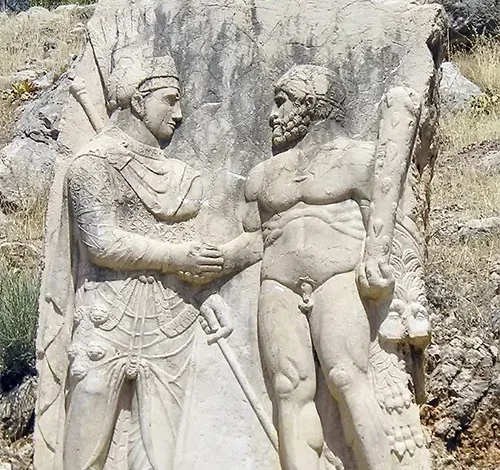
The Department of Ancient Studies at the Faculty of Humanities (UNIGE) is offering a series of public lectures dedicated to interactions, exchanges, and cultural dynamics in the ancient world. Faculty members and researchers will explore diplomatic relations, the movement of objects, religious and linguistic influences, and issues of identity at the crossroads of the Mediterranean and the ancient Near East.

In French.

2 – 6 November

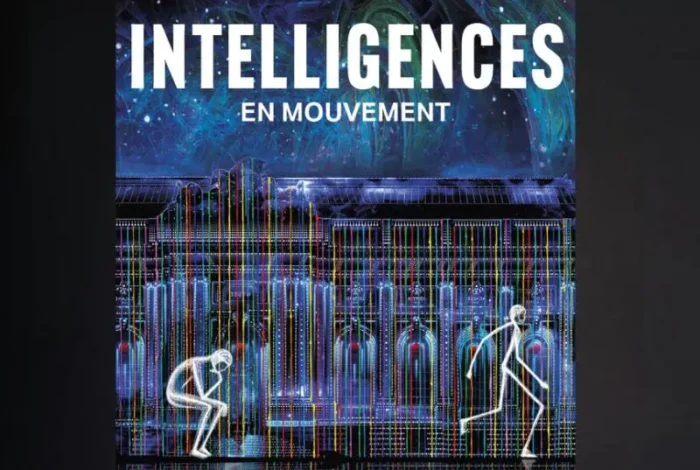
Wright Colloquium 2026 brings together interdisciplinary inquiry to rethink what we call intelligence. The program examines intelligence across scales — from artificial systems and ant colonies to neurons and engrams — and considers cognitive, neurological and philosophical perspectives. Participants will explore how different forms of intelligence shape societies, knowledge and our worldviews, with discussions, panels and workshops aimed at advancing conceptual and practical understanding.

In French and in English.

30 October – 8 November

Founded in 1995, the Geneva International Film Festival (GIFF) is one of Geneva’s longest-standing cinema festivals and among the first in the world to integrate television into its programming. A hub for experimentation, encounters, and celebration, the ten-day festival presents films, series, and immersive audiovisual experiences to some 35,000 visitors each year. GIFF also hosts the Geneva Digital Market, Switzerland’s only meeting point for professionals in innovation and audiovisual content, and maintains year-round activities including school programmes and GIFF UNLIMITED events. Recognized as a key driver of Switzerland’s audiovisual sector, GIFF combines artistic ambition with international reach.

Friday 6 November, 10:30

Anaïs Emery, Paola Gazzani Marinelli, Alexandre Iordachescu and Guillaume Schmid take part in this session presented with the Fondation pour la création numérique. Their discussion reflects on four years of work to strengthen the structure, funding and recognition of digital arts and culture in Romandy.

The talk introduces NEXUS, a new support programme for digital creation, and examines how such initiatives can drive cultural, social and educational transformation. It offers insight into the priorities shaping digital arts support in French-speaking Switzerland.

In English.

Friday 6 November, 14:30

Dr. Jean‑Yves Sovilla, neurologist specializing in sleep medicine, offers a historical and scientific survey of major epidemics. He examines the two greatest plague waves — late antique and 14th‑century Black Death — and recounts Alexandre Yersin’s role in identifying the plague bacillus. Recent genetic discoveries tracing plague evolution, the history and impact of influenza, AIDS and COVID, and the principles behind mRNA vaccine technology are also discussed.

In French.

7 November – 6 December

Professor Oduris, an eminent scholar of opera, condenses four centuries of lyric art into a compact, illustrated lecture-performance. Combining historical insight with theatrical storytelling, the presentation explores key moments, stylistic shifts and pivotal works that shaped opera from its origins to the modern stage. A prima donna and pianist join the talk, transforming chronology into a lively odyssey that highlights composers, vocal traditions and dramatic innovations. The format aims to inform and delight while clarifying how opera evolved.

In French.

Oops! It seems there
are no events matching your selection!

Please adjust your criteria to see more results.

Password was reset

Your password has been reset successfully. You can now log in with your new password.

Check your Inbox

We’ve sent you a password reset email to the address provided. Please check your inbox and/or spam folder.

Thank you!

Please check your inbox for a verification email to complete your sign-up.

Newsletter

Culture, curated weekly.

Add to Calendar

Select the date to be saved in your Google calendar.

calendar placeholder

Done!

Event removed from your CoolAgenda.

Yeah!

Event Saved to your CoolAgenda

Add to CoolAgenda

In your CoolAgenda

Date

Title

Location

Description

calendar placeholder

Reset password

Forgot your password?

Sign Up

Create your Account and Culture Up!