Saturday 27 June, 16:00

Family and Heritage

Free, Booking Required

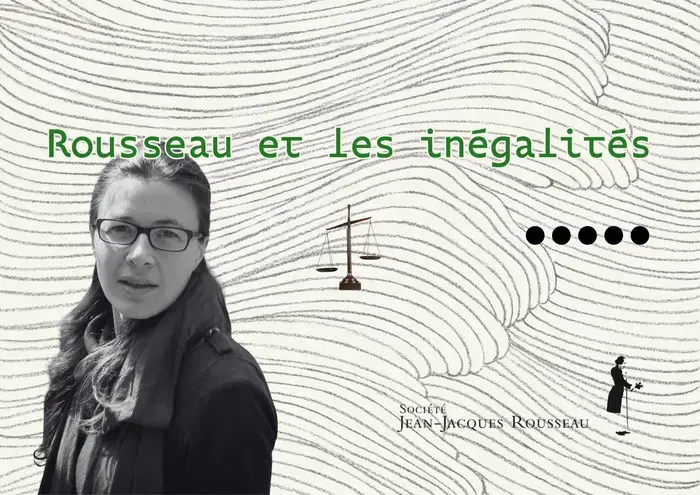
Mélanie Plouviez, philosopher and professor at Université Côte d’Azur, coordinates the PHILHERIT project and is author of L’injustice en héritage (2025). Gabrielle Radica, professor at Université de Lille, specializes in Rousseau.

This lecture examines Rousseau’s account of the family as both source and amplifier of social inequalities and of patrimony as a mechanism that reproduces disadvantage. The speakers explore whether family structures and inheritance can also serve as levers for reducing inequality, mobilizing classical and contemporary texts to illuminate the debate.

In English.
Grand-Rue 40,
1204 Genève
{"title":"Family and Heritage","description":"\u003Cp\u003EM\u00e9lanie Plouviez, philosopher and professor at Universit\u00e9 C\u00f4te d'Azur, coordinates the PHILHERIT project and is author of L\u2019injustice en h\u00e9ritage (2025). Gabrielle Radica, professor at Universit\u00e9 de Lille, specializes in Rousseau.\u003C\/p\u003E\u003Cp\u003EThis lecture examines Rousseau\u2019s account of the family as both source and amplifier of social inequalities and of patrimony as a mechanism that reproduces disadvantage. The speakers explore whether family structures and inheritance can also serve as levers for reducing inequality, mobilizing classical and contemporary texts to illuminate the debate.\u003C\/p\u003E\u003Cp\u003E\u003Cstrong\u003EIn English.\u003C\/strong\u003E\u003C\/p\u003E","start_date":"2026-06-27","end_date":"2026-06-27","date":"Saturday 27 June, 16:00","timings":[{"timing_start_date":"20260627T160000Z","timing_end_date":"20260627T170000Z"}]}
Photo Credit: DR

You might also like

Sunday 14 June, 19:30

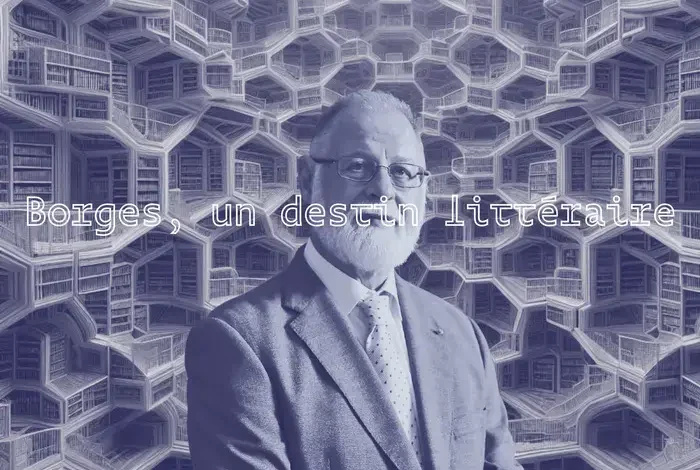
Alberto Manguel, Argentine-Canadian writer, essayist and former director of the National Library of Argentina, is known for A History of Reading and Reader of Borges; his work examines reading, libraries and literary imagination.

He will discuss Borges’s biographical dimension and its links to his poetics, examining how reading shaped Borges’s creativity—from childhood encounters in his father’s library to his later practice of reading through others. The lecture explores themes of memory, translation, textual transformation and the reader’s role.

In French.

28 January – 23 December

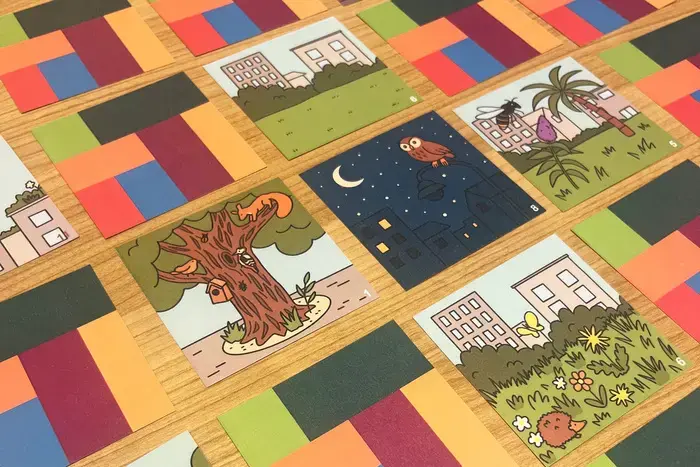
This interactive memory challenge invites participants to test their memory while exploring practical ways to preserve biodiversity based on Geneva’s municipal strategy. Players match “before-and-after” images that illustrate individual and institutional actions, and each correct pair reveals concise information explaining the measure. The activity examines themes such as habitat restoration, species-friendly practices, urban greening and policy responses, helping participants understand the impact and rationale behind everyday and organisational conservation choices.

12 – 14 June

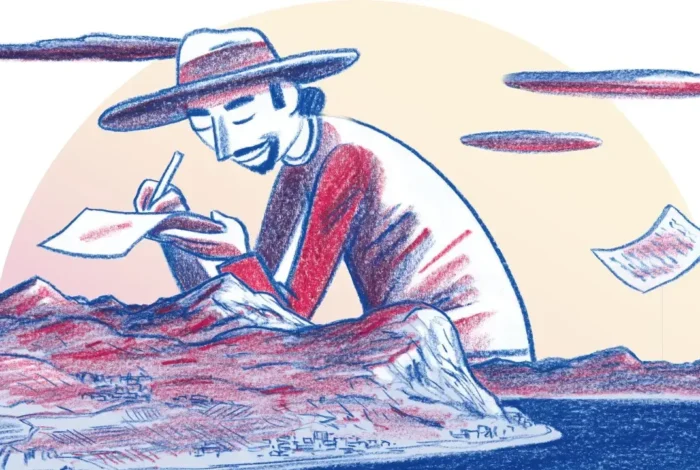
Join this intimate community reading series celebrating letters and journeys, centred on the theme “Beyond the Mountains.” Five outdoor readings present texts by Schwarzenbach, Cingria, Bouvier, Vernet and Eberhardt, performed by Marthe Keller, Jean‑Luc Bideau, Samuel Labarthe, Camille Bordet, Ophélie Gaillard and Geoffroy de Clavière. Each session stands alone and lasts about one hour. The festival invites neighbours, families and everyone curious about literature to come together, listen and share in a quiet, communal experience.

In French.

Sunday 14 June, 18:00

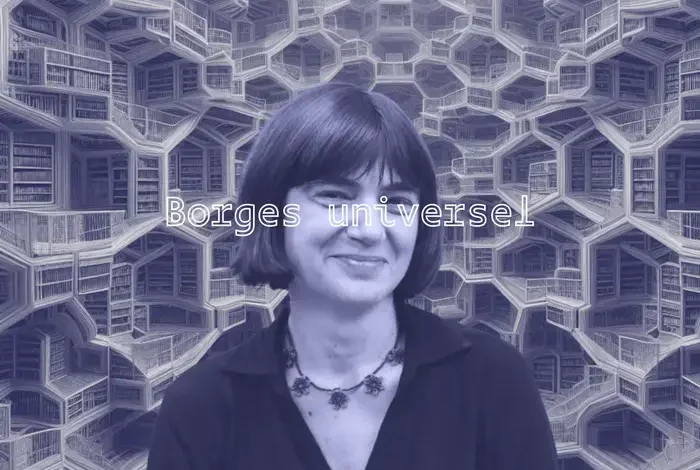
Annick Louis, a Franco-Argentine academic, and Félix Terrones, professor at the Institute of Hispanic Language and Literature (Universität Bern), bring scholarly expertise in Hispanic studies and literary criticism.

This lecture examines the elements of Borges’s writing that fascinate scholars and engage general readers, investigating his narrative strategies, themes of identity and labyrinthine structure, and the legacy he left for subsequent authors and literary movements.

In French.

28 January – 23 December

This workshop explores the traditional process of assembling a herbarium specimen, inspired by Jean-Jacques Rousseau’s collections. Participants learn scientific techniques for pressing and mounting dried plants on old paper, practice botanical labelling and nomenclature, and select specimens to create a personal herbarium sheet. The session examines preservation methods, identification principles and the historical context of Rousseau’s approach, combining practical skills with scientific insight to produce a lasting botanical object.

In French.

Tuesday 16 June, 12:15

Jacques Berchtold presents a study of Rousseau’s self-identification with exile, in dialogue with Chake Matossian (Académie Royale des Beaux-Arts, Brussels). He situates Rousseau’s gestures within artistic and textual traditions.

The lecture examines Rousseau’s abrupt adoption of Armenian dress and its representation by painters, linking classical (Ovid at Tomis) and Christian (John Chrysostom) models. Berchtold investigates the Enlightenment re-reading of Noah’s Ark on Mount Ararat and argues this purification of origin frames Rousseau as a new Noah confronting modern degeneration.

In French.

Oops! It seems there
are no events matching your selection!

Please adjust your criteria to see more results.

Newsletter

Culture, curated weekly.

Add to Calendar

Select the date to be saved in your Google calendar.

calendar placeholder

Done!

Event removed from your CoolAgenda.

Yeah!

Event Saved to your CoolAgenda

Add to CoolAgenda

In your CoolAgenda

Date

Title

Location

Description

calendar placeholder

Reset password

Password was reset

Your password has been reset successfully. You can now log in with your new password.

Check your Inbox

We’ve sent you a password reset email to the address provided. Please check your inbox and/or spam folder.

Forgot your password?

Thank you!

Please check your inbox for a verification email to complete your sign-up.

Sign Up

Create your Account and Culture Up!