Wednesday 9 December, 18:30

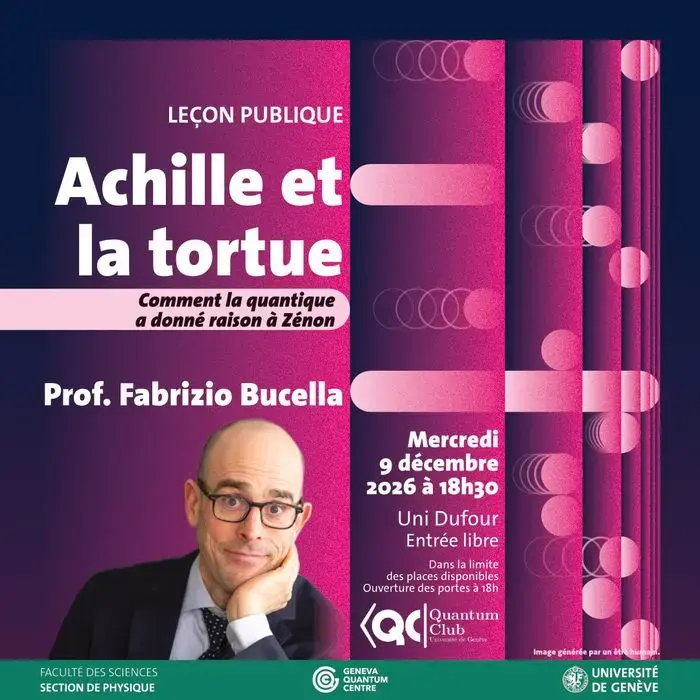
Achilles and the Tortoise

Professor Fabrizio Bucella presents a public lecture on Zeno’s famous paradoxes, examining how Achilles and the tortoise continue to challenge our intuitions about motion, distance, and time. Drawing on physics and quantum theory, he explores whether modern science can help resolve the apparent contradiction.

The talk follows the logic of the arrow paradox and related analogues, showing how seemingly simple questions can reveal deeper issues in mathematics and physics. It offers an accessible introduction to a classic philosophical problem and its contemporary scientific echoes.

In French.
Rue du Général-Dufour 24,
1204 Genève
{"title":"Achilles and the Tortoise","description":"\u003Cp\u003EProfessor Fabrizio Bucella presents a public lecture on Zeno\u2019s famous paradoxes, examining how Achilles and the tortoise continue to challenge our intuitions about motion, distance, and time. Drawing on physics and quantum theory, he explores whether modern science can help resolve the apparent contradiction.\u003C\/p\u003E\u003Cp\u003EThe talk follows the logic of the arrow paradox and related analogues, showing how seemingly simple questions can reveal deeper issues in mathematics and physics. It offers an accessible introduction to a classic philosophical problem and its contemporary scientific echoes.\u003C\/p\u003E\u003Cp\u003E\u003Cstrong\u003EIn French.\u003C\/strong\u003E\u003C\/p\u003E","start_date":"2026-12-09","end_date":"2026-12-09","date":"Wednesday 9 December, 18:30","timings":[{"timing_start_date":"20261209T170000Z","timing_end_date":"20261209T190000Z"}]}
Photo Credit: Quantum Club

You might also like

22 September – 15 December

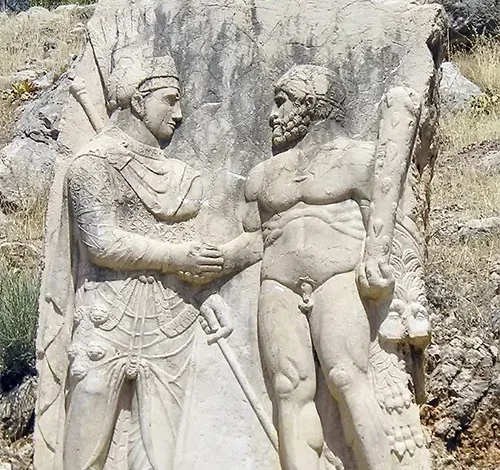
The Department of Ancient Studies at the Faculty of Humanities (UNIGE) is offering a series of public lectures dedicated to interactions, exchanges, and cultural dynamics in the ancient world. Faculty members and researchers will explore diplomatic relations, the movement of objects, religious and linguistic influences, and issues of identity at the crossroads of the Mediterranean and the ancient Near East.

In French.

Tuesday 3 November, 08:30

Organized by the W4W association, this bilingual symposium examines ethical perspectives on water through the lens of Albert Schweitzer’s concept of ‘reverence for life’. Researchers in ethics and theology join scientists and health professionals to investigate moral responsibilities, policy implications, and interdisciplinary approaches to water stewardship. Sessions explore conceptual frameworks, practical applications in healthcare and environmental management, and pathways for integrating ethical reflection into public and professional practice.

Tuesday 3 November, 11:30

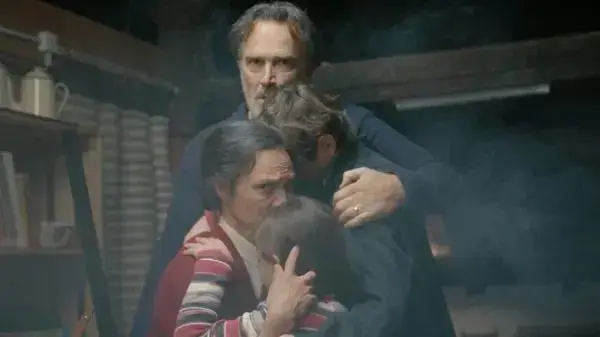
Director Romed Wyder and Ulrich Fischer of Memoways present a case study on where AI extends cinematic storytelling. Their discussion examines how audiences can continue engaging with Where Is Ava? after the screening by conversing with the film’s characters through artificial intelligence. The session reveals new narrative possibilities, while also raising questions about authorship, immersion, and the evolving relationship between cinema and interactive technology.

30 October – 8 November

Founded in 1995, the Geneva International Film Festival (GIFF) is one of Geneva’s longest-standing cinema festivals and among the first in the world to integrate television into its programming. A hub for experimentation, encounters, and celebration, the ten-day festival presents films, series, and immersive audiovisual experiences to some 35,000 visitors each year. GIFF also hosts the Geneva Digital Market, Switzerland’s only meeting point for professionals in innovation and audiovisual content, and maintains year-round activities including school programmes and GIFF UNLIMITED events. Recognized as a key driver of Switzerland’s audiovisual sector, GIFF combines artistic ambition with international reach.

2 – 6 November

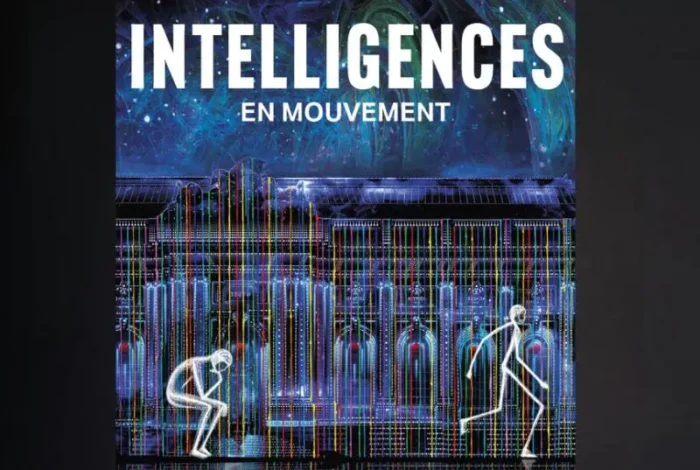
Wright Colloquium 2026 brings together interdisciplinary inquiry to rethink what we call intelligence. The program examines intelligence across scales — from artificial systems and ant colonies to neurons and engrams — and considers cognitive, neurological and philosophical perspectives. Participants will explore how different forms of intelligence shape societies, knowledge and our worldviews, with discussions, panels and workshops aimed at advancing conceptual and practical understanding.

In French and in English.

Tuesday 3 November, 12:30

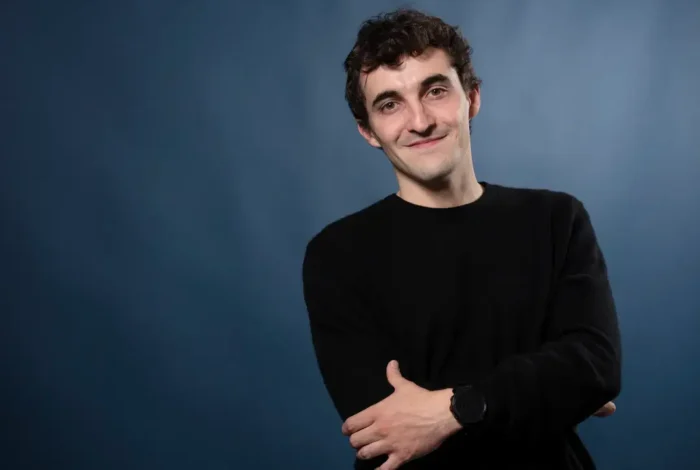
Arnaud Miranda, born in 1997, holds a Ph.D. in political theory and is affiliated with the Center for Political Research at Sciences Po. Winner of the Fondation des Treilles Young Researcher Award in 2024 and author of Les Lumières sombres (Gallimard, winner of the 2026 Revue des Deux Mondes Prize), he examines American neo-reactionary thought. The lecture investigates how this movement, bolstered by technology and conservative networks, threatens democratic norms, exploring masculinism, biologism and the rise of a radical counterculture. Moderated by Serge Michel.

In French.

Oops! It seems there
are no events matching your selection!

Please adjust your criteria to see more results.

Password was reset

Your password has been reset successfully. You can now log in with your new password.

Check your Inbox

We’ve sent you a password reset email to the address provided. Please check your inbox and/or spam folder.

Thank you!

Please check your inbox for a verification email to complete your sign-up.

Newsletter

Culture, curated weekly.

Add to Calendar

Select the date to be saved in your Google calendar.

calendar placeholder

Done!

Event removed from your CoolAgenda.

Yeah!

Event Saved to your CoolAgenda

Add to CoolAgenda

In your CoolAgenda

Date

Title

Location

Description

calendar placeholder

Reset password

Forgot your password?

Sign Up

Create your Account and Culture Up!