Tuesday 3 November, 18:30

Democracy, Neutrality, People: Can Politics Be Spoken Differently in Switzerland?

Does Switzerland have a distinctive way of thinking about politics? This lecture examines whether concepts such as democracy, federalism, neutrality, the people and freedom have followed singular trajectories in the Swiss context. Marking the creation of the Swiss Conceptual History Cluster at the University of Geneva, it investigates a fundamental question: is there a specifically Swiss history of political concepts? The discussion brings together history, languages and ideas to open a fresh perspective on political thought.

In French.
rue Jean-F. Bartholoni 6,
Geneva, Switzerland
{"title":"Democracy, Neutrality, People: Can Politics Be Spoken Differently in Switzerland?","description":"\u003Cp\u003EDoes Switzerland have a distinctive way of thinking about politics? This lecture examines whether concepts such as democracy, federalism, neutrality, the people and freedom have followed singular trajectories in the Swiss context. Marking the creation of the Swiss Conceptual History Cluster at the University of Geneva, it investigates a fundamental question: is there a specifically Swiss history of political concepts? The discussion brings together history, languages and ideas to open a fresh perspective on political thought.\u003C\/p\u003E\u003Cp\u003E\u003Cstrong\u003EIn French.\u003C\/strong\u003E\u003C\/p\u003E","start_date":"2026-11-03","end_date":"2026-11-03","date":"Tuesday 3 November, 18:30","timings":[{"timing_start_date":"20261103T173000Z","timing_end_date":"20261103T193000Z"}]}
Photo Credit: DR

You might also like

Tuesday 3 November, 16:45

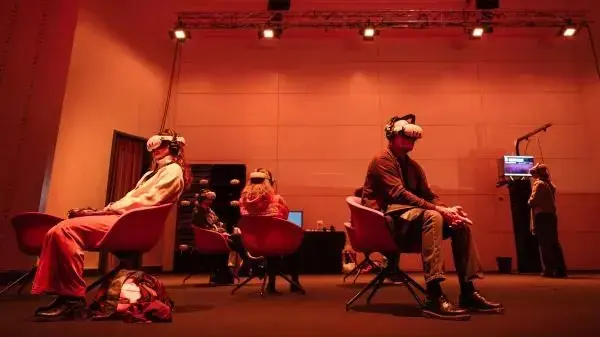
Thomas Dexmier and Eric J. Krueger join this panel on the next generation of immersive technologies, bringing perspectives from leading manufacturers and product development. Their discussion examines lighter headsets, augmented-reality glasses, spatial computing, and gesture- and voice-based interfaces.

The session explores how these tools could reshape creative workflows and audience experiences, while also revealing the practical challenges of adoption, design, and interoperability. It offers a clear view of how extended realities are evolving beyond novelty into infrastructure for future audiovisual and cultural practice.

Tuesday 3 November, 14:00

Gregg Bywalski examines how the creator economy is reshaping the audiovisual industry in 2026. Drawing on Webedia’s expertise, he discusses IP development, production, distribution, and new partnerships, highlighting how these shifts are redefining market structures and opening fresh opportunities for creators and industry players alike.

The talk explores the convergence of cinema, digital platforms, and audience engagement, with a focus on emerging value chains and the strategic implications for audiovisual professionals.

Tuesday 3 November, 11:30

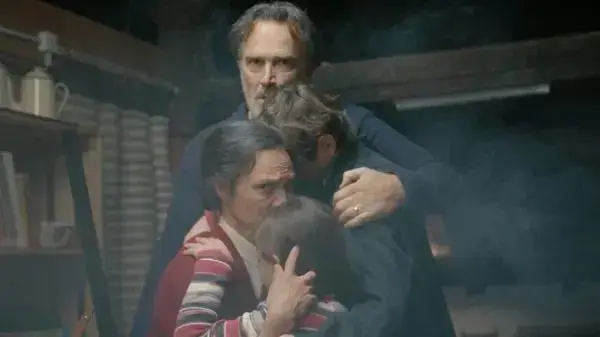
Director Romed Wyder and Ulrich Fischer of Memoways present a case study on where AI extends cinematic storytelling. Their discussion examines how audiences can continue engaging with Where Is Ava? after the screening by conversing with the film’s characters through artificial intelligence. The session reveals new narrative possibilities, while also raising questions about authorship, immersion, and the evolving relationship between cinema and interactive technology.

Tuesday 3 November, 15:15

David Bardos presents a case study on transforming the Black Mirror universe into a physical and immersive experience. The talk examines how the original intellectual property was adapted and how physical sets, free-roaming VR and interactive storytelling were combined into a single audience journey. It highlights the creative and technical choices behind location-based entertainment and the challenge of maintaining coherence across multiple media.

In English.

2 – 6 November

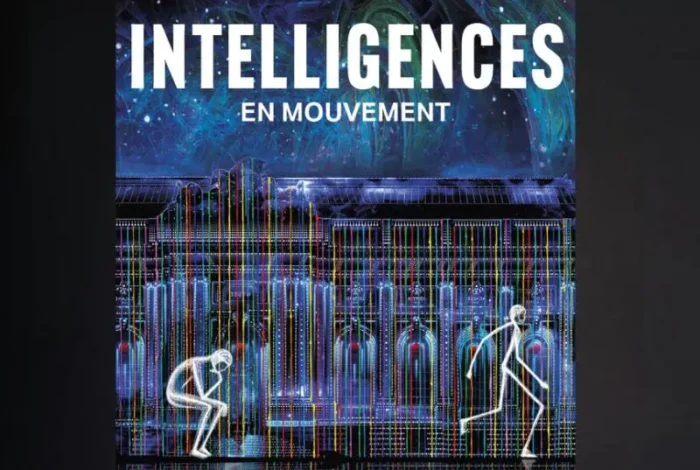
Wright Colloquium 2026 brings together interdisciplinary inquiry to rethink what we call intelligence. The program examines intelligence across scales — from artificial systems and ant colonies to neurons and engrams — and considers cognitive, neurological and philosophical perspectives. Participants will explore how different forms of intelligence shape societies, knowledge and our worldviews, with discussions, panels and workshops aimed at advancing conceptual and practical understanding.

In French and in English.

Tuesday 3 November, 08:30

Organized by the W4W association, this bilingual symposium examines ethical perspectives on water through the lens of Albert Schweitzer’s concept of ‘reverence for life’. Researchers in ethics and theology join scientists and health professionals to investigate moral responsibilities, policy implications, and interdisciplinary approaches to water stewardship. Sessions explore conceptual frameworks, practical applications in healthcare and environmental management, and pathways for integrating ethical reflection into public and professional practice.

Oops! It seems there
are no events matching your selection!

Please adjust your criteria to see more results.

Password was reset

Your password has been reset successfully. You can now log in with your new password.

Check your Inbox

We’ve sent you a password reset email to the address provided. Please check your inbox and/or spam folder.

Thank you!

Please check your inbox for a verification email to complete your sign-up.

Newsletter

Culture, curated weekly.

Add to Calendar

Select the date to be saved in your Google calendar.

calendar placeholder

Done!

Event removed from your CoolAgenda.

Yeah!

Event Saved to your CoolAgenda

Add to CoolAgenda

In your CoolAgenda

Date

Title

Location

Description

calendar placeholder

Reset password

Forgot your password?

Sign Up

Create your Account and Culture Up!