Thursday 29 October, 19:00

Navigating the Tensions of the Ecological Transition

Free, Booking Required

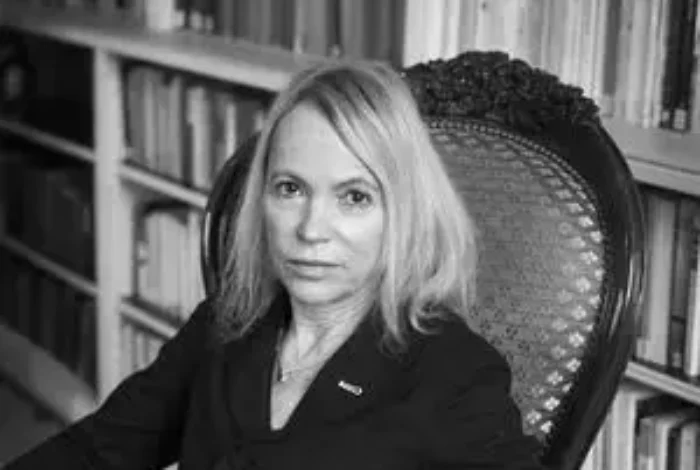
Prof. Livia Fritz, assistant professor in the Department of Geography and Environment and at the Institute of Environmental Sciences, University of Geneva, presents a public lecture on the socio-technical dimensions of the ecological transition. She examines competing visions for energy, mobility and housing, the actors shaping those pathways, and the tensions between social justice, technological choices and sustainability. The talk offers analytical tools to understand trade-offs and navigate contested decisions.

In French.

Boulevard du Pont-d'Arve 40,
1205 Genève
{"title":"Navigating the Tensions of the Ecological Transition","description":"\u003Cp\u003EProf. Livia Fritz, assistant professor in the Department of Geography and Environment and at the Institute of Environmental Sciences, University of Geneva, presents a public lecture on the socio-technical dimensions of the ecological transition. She examines competing visions for energy, mobility and housing, the actors shaping those pathways, and the tensions between social justice, technological choices and sustainability. The talk offers analytical tools to understand trade-offs and navigate contested decisions.\u003C\/p\u003E\u003Cp\u003E\u003Cstrong\u003EIn French.\u003C\/strong\u003E\u003C\/p\u003E","start_date":"2026-10-29","end_date":"2026-10-29","date":"Thursday 29 October, 19:00","timings":[{"timing_start_date":"20261029T170000Z","timing_end_date":"20261029T190000Z"}]}
Photo Credit: DR / UNIGE

You might also like

Thursday 29 October, 19:00

Laure Adler, journalist, essayist, editor and radio producer, trained in history and philosophy, is a leading figure of French cultural life. Renowned for her feminist activism and acclaimed biographies — including a Prix Femina-winning portrait of Marguerite Duras — Adler examines memory, testimony and archival silence. Drawing on her night at Yad Vashem for the Ma nuit au musée series, she reflects on the archives and human stories at the heart of Holocaust history. Moderated by Manuel Carcassonne.

In French.

Thursday 29 October, 18:30

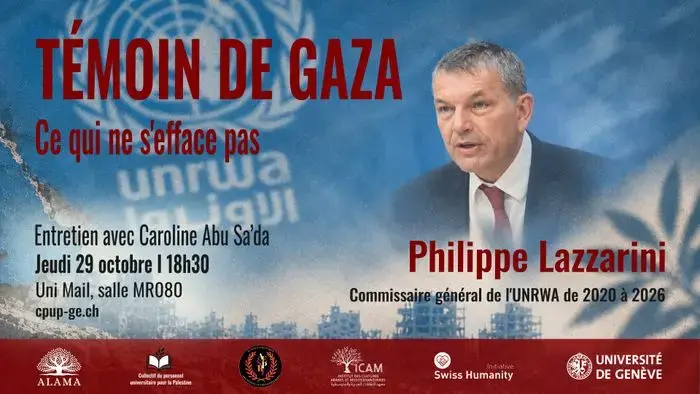
Philippe Lazzarini, former Commissioner-General of UNRWA, draws on his experience leading the agency to testify about the Gaza conflict, the humanitarian crisis and pressures faced by UNRWA.

He examines the limits of the UN, diplomatic tensions, and challenges for international law, retracing negotiations and political pressures that shape humanitarian response. In conversation with Caroline Abu Sa’Da (UREPH, Médecins Sans Frontières), he presents his recent book and offers insights into multilateral diplomacy and the stakes surrounding Gaza.

In French.

Thursday 29 October, 19:30

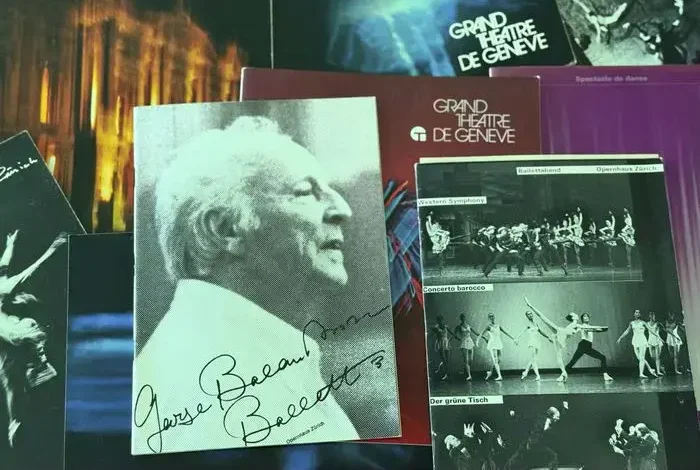
Patrice Delay leads the workshop, guiding participants through Balanchine’s repertoire and archival traces in Geneva’s ballet history and contemporary reception in Switzerland.

The session examines Balanchine’s approach to music and the centrality of movement in his choreographic practice, exploring how his aesthetic influenced local companies and shaped modern ballet discourse. Participants will investigate repertoire, interpretive strategies, and the lasting artistic legacies that inform contemporary choreography.

In French.

Thursday 29 October, 18:15

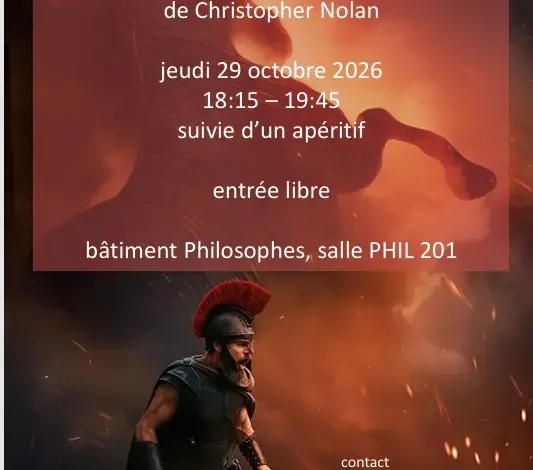
A discussion of Christopher Nolan’s adaptation of The Odyssey: can a modern film capture the essence of Homer’s ancient epic without betraying its original spirit? Experts in archaeology, history of religions, and Greek literature will share their perspectives before opening the debate to the audience.

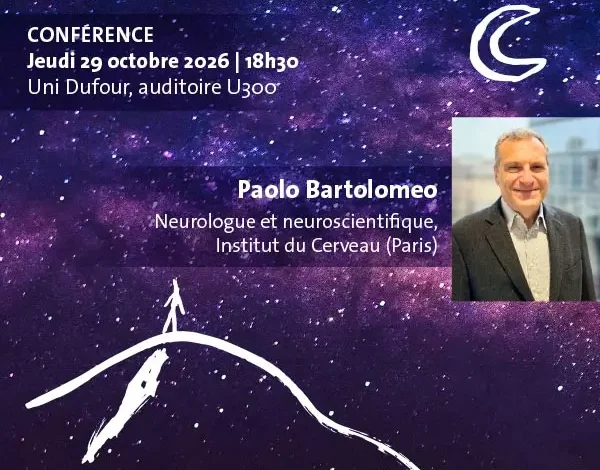
Thursday 29 October, 18:30

Paolo Bartolomeo presents a lecture on the links between brain activity, attention and consciousness. Drawing on clinical observations and experimental neuroscience, the talk examines the role of large-scale brain networks, the contributions of both cerebral hemispheres and the main theories of consciousness, evaluating their insights and limitations. The session aims to clarify how neural mechanisms relate to conscious experience and to highlight open questions for research and clinical practice.

In French.

Thursday 29 October, 12:15

Jean-Pierre Olivier de Sardan, Research Director Emeritus at CNRS (France) and researcher at LASDEL (Niger), brings decades of fieldwork and expertise on African social sciences and development studies.

He examines decolonial studies’ claims that coloniality persists unchanged, arguing they downplay African agency and the complex internal dynamics behind democratization, decentralization and scientific development. The talk investigates historical evidence, methodological limits, and implications for current African social sciences.

In French.

Oops! It seems there
are no events matching your selection!

Please adjust your criteria to see more results.

Password was reset

Your password has been reset successfully. You can now log in with your new password.

Check your Inbox

We’ve sent you a password reset email to the address provided. Please check your inbox and/or spam folder.

Thank you!

Please check your inbox for a verification email to complete your sign-up.

Newsletter

Culture, curated weekly.

Add to Calendar

Select the date to be saved in your Google calendar.

calendar placeholder

Done!

Event removed from your CoolAgenda.

Yeah!

Event Saved to your CoolAgenda

Add to CoolAgenda

In your CoolAgenda

Date

Title

Location

Description

calendar placeholder

Reset password

Forgot your password?

Sign Up

Create your Account and Culture Up!