

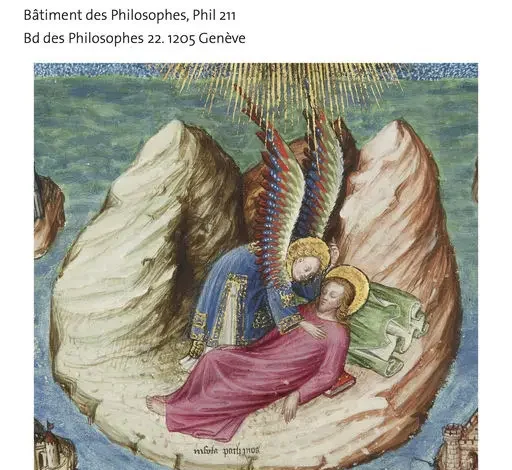
Jean Bapteur est documenté de 1423 à 1458–1459 comme peintre établi à Genève, où il tient une place majeure dans le réseau local tout en travaillant pour la cour des ducs de Savoie, entre Chambéry et les résidences lémaniques de Thonon et de Ripaille. Redécouverte à la fin du XIXe siècle et reconstituée au cours du XXe siècle, sa production ne se limite pas à l’enluminure de manuscrits prestigieux — l’Apocalypse de l’Escorial, les Heures de Saluces — ni au singulier tableau de la Crucifixion de Turin. Elle passe aussi par d’autres techniques, du textile au cuir, et par la supervision de grands chantiers de peinture murale. L’ouvrage d’Alix Buisseret reconstruit le parcours du peintre et le replace dans la production genevoise et savoyarde de son temps. Il constitue le huitième volume de la collection des Ressuscités de l’histoire de l’art, issue du programme genevois Peindre en France à la Renaissance.
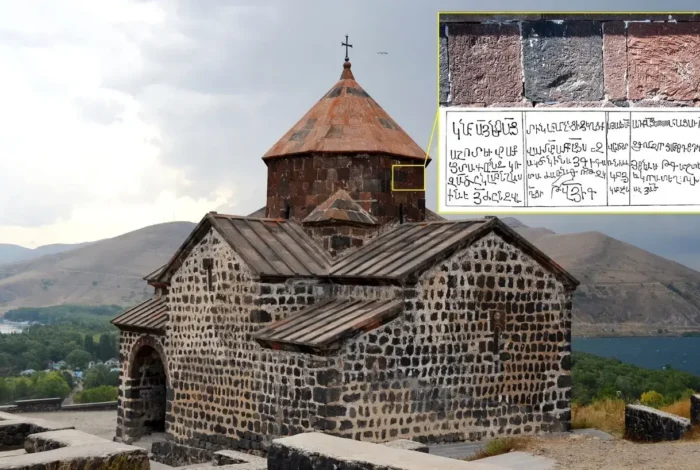
Arsen Harutyunyan, researcher at the Institute of Archaeology and Ethnography of the Armenian Academy of Sciences and the Mesrop Mashtots Institute of Ancient Manuscripts, Yerevan State University, presents research on medieval Armenian noblewomen’s patronage. Drawing on epigraphic evidence, Harutyunyan examines how elite women sponsored religious and cultural projects and how their presence is recorded in inscriptions, illuminating gendered networks of power and memory in medieval Armenia.
In English.
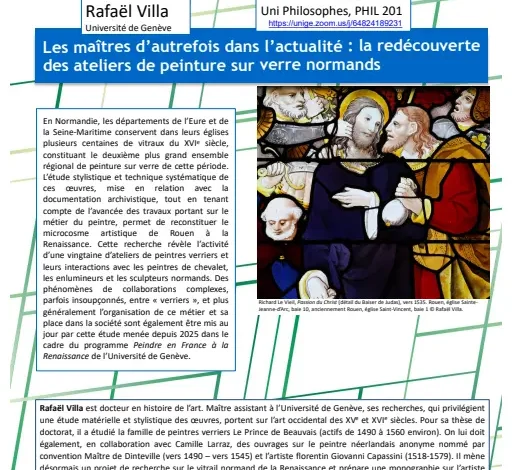
This research sheds light on the activities of around twenty stained-glass workshops and their interactions with Norman easel painters, illuminators, and sculptors. The study—conducted since 2025 as part of the University of Geneva’s “Peindre en France à la Renaissance” (Painting in Renaissance France) program—also reveals complex and sometimes unsuspected collaborative relationships among glass painters, as well as the broader organization of the craft and its role in society. Rafaël Villa holds a PhD in Art History. As an assistant professor at the University of Geneva, he focuses his research on Western art of the 15th and 16th centuries, emphasizing the material and stylistic analysis of artworks.
In French.
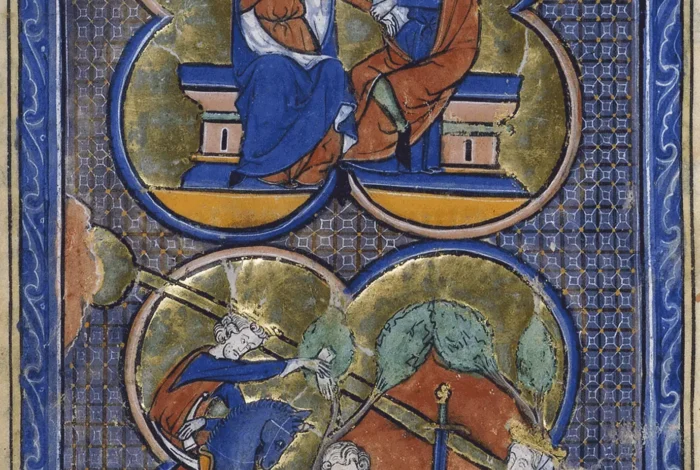
Henry Ravenhall, assistant professor at the University of Berkeley, brings expertise in medieval manuscripts and literary culture. He focuses on material practices and textual transmission in the Middle Ages.
This lecture examines touch and the performativity of the manuscript through Richard de Fournival and his contemporaries, exploring how bodily interaction, annotation and reading practices shape meaning and authorship. Ravenhall discusses methodological approaches that combine codicology and literary analysis to reveal new perspectives on medieval textuality.
In French.

Vincent Duclert, senior researcher at CESPRA (EHESS‑CNRS) and former director, discusses how historians approach representations of catastrophe. Drawing on his research on genocide and cinema, he examines the intersections of memory, image and historical testimony and reflects on how film shapes and challenges historical understanding. The session includes a screening of the documentary «Ce que je sais. Paroles pour l’histoire. 1992-2022.» It is presented in the context of Valentina Calzolari’s transversal course.
In French.

Jean-Pierre Cabestan, research director emeritus at the CNRS and professor emeritus at Hong Kong Baptist University, presents his analysis of Taiwan and its relations with China. He examines Taiwan’s political divisions, the population’s attachment to the status quo and its democratic institutions, and the island’s economic strengths beyond semiconductors. Cabestan also discusses Taiwan’s cultural soft power—notably literature and cinema—and evaluates strategic dynamics between Beijing and Washington that will shape Taiwan’s future.
In French.
Your password has been reset successfully. You can now log in with your new password.
We’ve sent you a password reset email to the address provided. Please check your inbox and/or spam folder.
Please check your inbox for a verification email to complete your sign-up.
Culture, curated weekly.
Event removed from your CoolAgenda.


