Wednesday 4 March, 18:30

When Seeds Become Profit: Who Feeds the World?

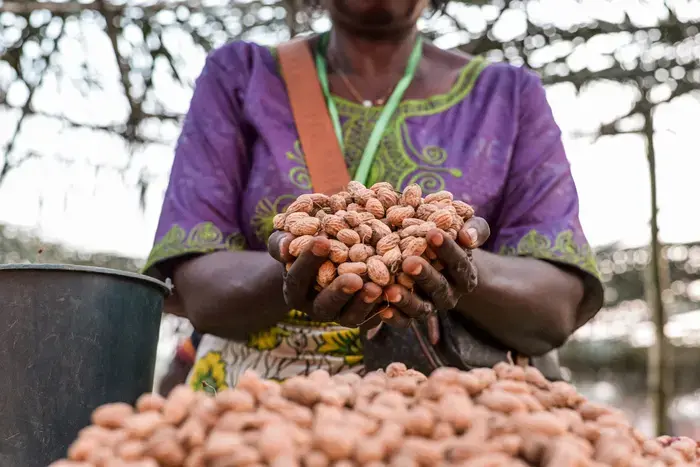
Using excerpts from the documentary The Last Seed (Andrea Gama, 2023), this projection and roundtable examines the privatization of seeds and its consequences for biodiversity, public health and food sovereignty. It investigates how patents and corporate control undermine farmers’ seed systems and amplify economic inequalities, and highlights struggles by African peasant communities to preserve seed diversity. The discussion crosses local and international perspectives to reveal threats to the right to food and the solidarities needed to protect agricultural commons.

In French.
{"title":"When Seeds Become Profit: Who Feeds the World?","description":"\u003Cp\u003EUsing excerpts from the documentary The Last Seed (Andrea Gama, 2023), this projection and roundtable examines the privatization of seeds and its consequences for biodiversity, public health and food sovereignty. It investigates how patents and corporate control undermine farmers' seed systems and amplify economic inequalities, and highlights struggles by African peasant communities to preserve seed diversity. The discussion crosses local and international perspectives to reveal threats to the right to food and the solidarities needed to protect agricultural commons.\u003C\/p\u003E\u003Cp\u003E\u003Cstrong\u003EIn French.\u003C\/strong\u003E\u003C\/p\u003E","start_date":"2026-03-04","end_date":"2026-03-04","date":"Wednesday 4 March, 18:30","timings":[{"timing_start_date":"20260304T183000Z","timing_end_date":"20260304T210000Z"}]}
Photo Credit: EPER

You might also like

Tuesday 3 March, 09:30

Geneva-based and international organizations and experts present a focused exhibition on medicinal and aromatic plants, exploring their roles in human health, cultural heritage and sustainable livelihoods. Displays combine photographic and informational panels, research highlights and short-format Lightning Talks that reveal applications across healthcare, food security, responsible trade and environmental protection. Through scientific findings and community knowledge, the presentation examines threats such as habitat loss, overharvesting and climate change, and highlights collaborative conservation and stewardship approaches.

Tuesday 3 March, 12:30

Emmanuel Rondeau, financier and bank administrator and author of Les frères d’Astier de La Vigerie, Français libres (Tallandier, 2025), combines family memory and historical inquiry. He examines three members of the d’Astier de la Vigerie family — each with divergent public roles yet united in their commitment to the French Resistance — to reveal how personal convictions shaped national destiny. The lecture explores political identity, courage and the moral complexities of resistance, told with close knowledge and narrative panache.

In French.

Tuesday 3 March, 18:30

Lucy Lagier, specialist in early modern history and author of a bachelor’s thesis on ceremonial display and royal image in the sixteenth century, will begin a Master’s in General History at the University of Neuchâtel.

This lecture examines the politics of appearance around Elizabeth I, exploring how clothing and jewellery signalled social rank and inner identity. It investigates the influence of Protestant norms on her aesthetic choices and considers whether crafted imagery contributed to the acquisition and preservation of monarchical power.

In French.

Tuesday 3 March, 16:15

Till Mostowlansky, anthropologist at the Geneva Graduate Institute, presents the edited volume Humanitarianism from Below? with contributions from Alexander Ephrussi. Discussant Prof. Davide Rodogno joins the conversation.

Drawing on ethnographic and historical research, the seminar examines alternative and often overlooked forms of humanitarianism worldwide, interrogating assumptions of universalism and assessing their effects on global aid practices. The discussion highlights local initiatives, moral economies, and the political stakes of defining humanitarian worth.

In English.

28 January – 23 December

This workshop explores the traditional process of assembling a herbarium specimen, inspired by Jean-Jacques Rousseau’s collections. Participants learn scientific techniques for pressing and mounting dried plants on old paper, practice botanical labelling and nomenclature, and select specimens to create a personal herbarium sheet. The session examines preservation methods, identification principles and the historical context of Rousseau’s approach, combining practical skills with scientific insight to produce a lasting botanical object.

In French.

Wednesday 4 March, 14:00

Discover the Flore des Dames de Genève, an early 19th-century collective masterpiece that brings together science, art, and society. In 1813, to preserve and study botanical drawings from Mexico loaned to Augustin-Pyramus de Candolle, nearly a thousand copies were made by hand in just eight days, mostly by women from Geneva’s high society. This guided visit showcases both the original drawings and their precious copies, preserving an exceptional scientific and artistic heritage.

Oops! It seems there
are no events matching your selection!

Please adjust your criteria to see more results.

Add to Calendar

Select the date to be saved in your Google calendar.

calendar placeholder

Done!

Event removed from your CoolAgenda.

Yeah!

Event Saved to your CoolAgenda

Add to CoolAgenda

In your CoolAgenda

Reset password

Password was reset

Your password has been reset successfully. You can now log in with your new password.

Check your Inbox

We’ve sent you a password reset email to the address provided. Please check your inbox and/or spam folder.

Forgot your password?

Thank you!

Please check your inbox for a verification email to complete your sign-up.

Sign Up

Create your Account and Culture Up!