Sunday 29 March, 14:00

BiblioWeekend 2026: Play, Pray, Collect

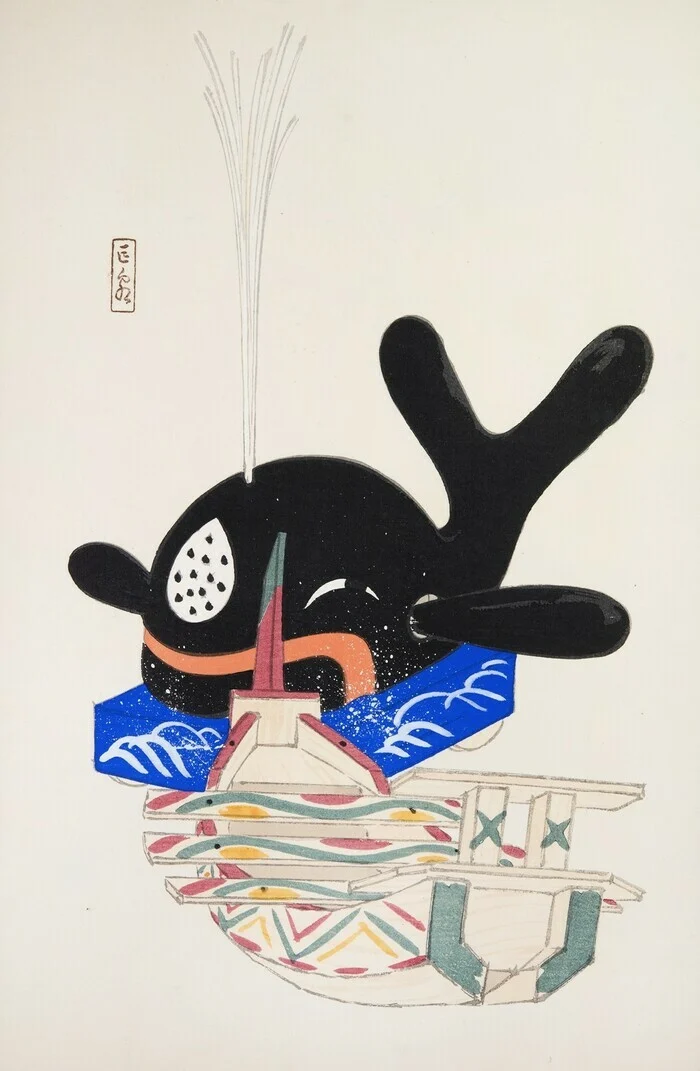
During BiblioWeekend 2026, a public conference explores the multifaceted nature of toys beyond their basic play function. Taking inspiration from Japanese and East Asian examples, the talk highlights how these objects transform into subjects of devotion and hold sentimental or religious significance, at times even being honored with funeral ceremonies. The presentation is led by Damien Kunik, curator in the Asia Department of the MEG.

In French.
Boulevard Carl-Vogt 65,
1205 Genève
{"title":"BiblioWeekend 2026: Play, Pray, Collect","description":"During BiblioWeekend 2026, a public conference explores the multifaceted nature of toys beyond their basic play function. Taking inspiration from Japanese and East Asian examples, the talk highlights how these objects transform into subjects of devotion and hold sentimental or religious significance, at times even being honored with funeral ceremonies. The presentation is led by Damien Kunik, curator in the Asia Department of the MEG.\r\n\r\n\u003Cstrong\u003EIn French.\u003C\/strong\u003E","start_date":"2026-03-29","end_date":"2026-03-29","date":"Sunday 29 March, 14:00","timings":[{"timing_start_date":"20260329T120000Z","timing_end_date":"20260329T130000Z"}]}
Photo Credit: © Kawasaki Kyosen DR

You might also like

Wednesday 4 March, 17:30

Author Lana Calzolari appears for a conversation and signing, introduced by Sandrine Bourgeois, president of the Festival du LÀC. The event offers an opportunity to hear Calzolari discuss her books, her creative approach and the themes that shape her work, followed by a signing session and audience exchange. Attendees will gain insight into the author’s practice and the context of the presented works.

In French.

Wednesday 4 March, 14:15

Claudia Kedar, historian at the Hebrew University of Jerusalem, presents her new book offering a comprehensive study of the World Bank’s role during the Cold War in Latin America. Drawing on multi-archival research and newly declassified World Bank documents, Kedar examines the Bank’s responses to Argentina’s major economic and political challenges: populism, developmentalism, economic nationalism, authoritarian rule, human rights abuses and the 1980s ‘Lost Decade.’ The lecture situates these interactions within broader Cold War and development debates.

In English.

28 January – 23 December

This interactive memory challenge invites participants to test their memory while exploring practical ways to preserve biodiversity based on Geneva’s municipal strategy. Players match “before-and-after” images that illustrate individual and institutional actions, and each correct pair reveals concise information explaining the measure. The activity examines themes such as habitat restoration, species-friendly practices, urban greening and policy responses, helping participants understand the impact and rationale behind everyday and organisational conservation choices.

8 October 2025 – 3 June 2026

Pierre Béguin leads monthly discussions on classic literature, linking timeless texts to today’s world through lively, open conversation.

Upcoming themes:

  • Fall 2025: Master–servant dynamics in theatre and novels (17th–19th c.)
  • Dec 2025: Romantic encounters in 19th-century French fiction
  • Spring 2026: Latin American authors (Sábato, Amado, Vargas Llosa)

First session readings:

  • Don Juan (Molière)
  • The Game of Love and Chance, The Island of Slaves (Marivaux)
  • The Marriage of Figaro (Beaumarchais)

Pierre Béguin taught literature for nearly 30 years at Collège Calvin in Geneva. Born in Geneva, he holds a degree in literature and a postgraduate diploma in psycholinguistics. A passionate traveler, he has devoted the past two decades primarily to writing.  He is the author of around ten novels, including Terre de personne (Prix Schiller 2005), Vous ne connaîtrez ni le jour ni l’heure (Prix Chronos selection, 2013), Condamné au bénéfice du doute (Prix Edouard Rod 2016), and La scandaleuse Madame B. (2020).  His most recent novel, Au nom du feu (2022), was shortlisted for the RTS Listeners’ Prize, the Lettres Frontière Prize, and the Rambert Prize.

In French.

Wednesday 4 March, 14:00

Discover the Flore des Dames de Genève, an early 19th-century collective masterpiece that brings together science, art, and society. In 1813, to preserve and study botanical drawings from Mexico loaned to Augustin-Pyramus de Candolle, nearly a thousand copies were made by hand in just eight days, mostly by women from Geneva’s high society. This guided visit showcases both the original drawings and their precious copies, preserving an exceptional scientific and artistic heritage.

28 January – 23 December

This workshop explores the traditional process of assembling a herbarium specimen, inspired by Jean-Jacques Rousseau’s collections. Participants learn scientific techniques for pressing and mounting dried plants on old paper, practice botanical labelling and nomenclature, and select specimens to create a personal herbarium sheet. The session examines preservation methods, identification principles and the historical context of Rousseau’s approach, combining practical skills with scientific insight to produce a lasting botanical object.

In French.

Oops! It seems there
are no events matching your selection!

Please adjust your criteria to see more results.

Add to Calendar

Select the date to be saved in your Google calendar.

calendar placeholder

Done!

Event removed from your CoolAgenda.

Yeah!

Event Saved to your CoolAgenda

Add to CoolAgenda

In your CoolAgenda

Reset password

Password was reset

Your password has been reset successfully. You can now log in with your new password.

Check your Inbox

We’ve sent you a password reset email to the address provided. Please check your inbox and/or spam folder.

Forgot your password?

Thank you!

Please check your inbox for a verification email to complete your sign-up.

Sign Up

Create your Account and Culture Up!