The Art of the Interview: In Conversation with Alain Elkann

by Donna Adiri

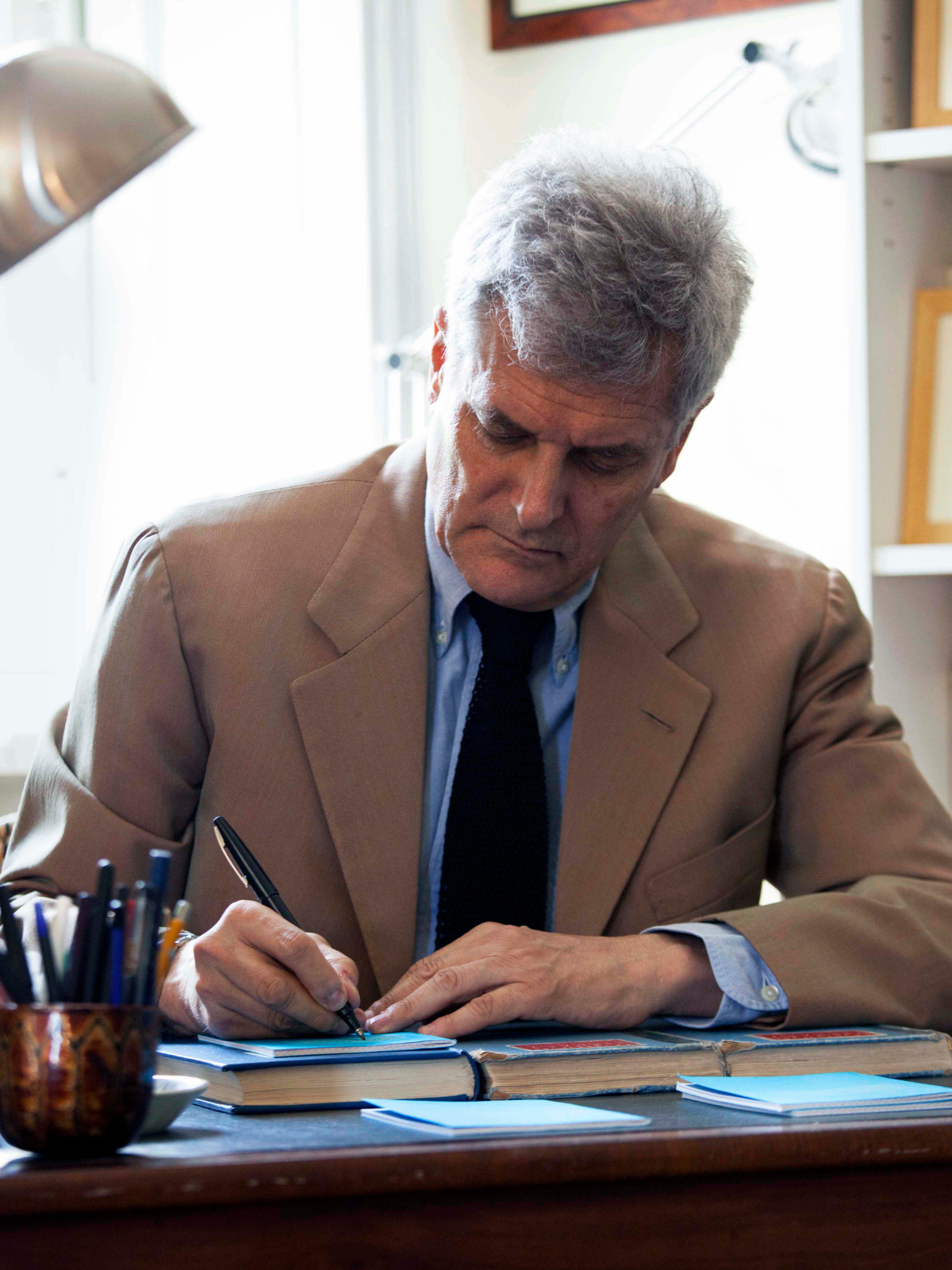
Alain Elkann
Photo Credit: Alain Elkann

The Art of the Interview: In Conversation with Alain Elkann

by Donna Adiri

Writer, interviewer, collector of conversations. Alain Elkann has sat across from presidents, cardinals, artists, and Nobel Prize winners — thousands of conversations spanning decades — and never once posed a question he wasn’t willing to abandon. I met him at his home in Geneva to talk a bit about everything: the craft of the interview, the future of books, why common sense might be the most underrated virtue of our time, and the advice that has stayed with him since childhood.


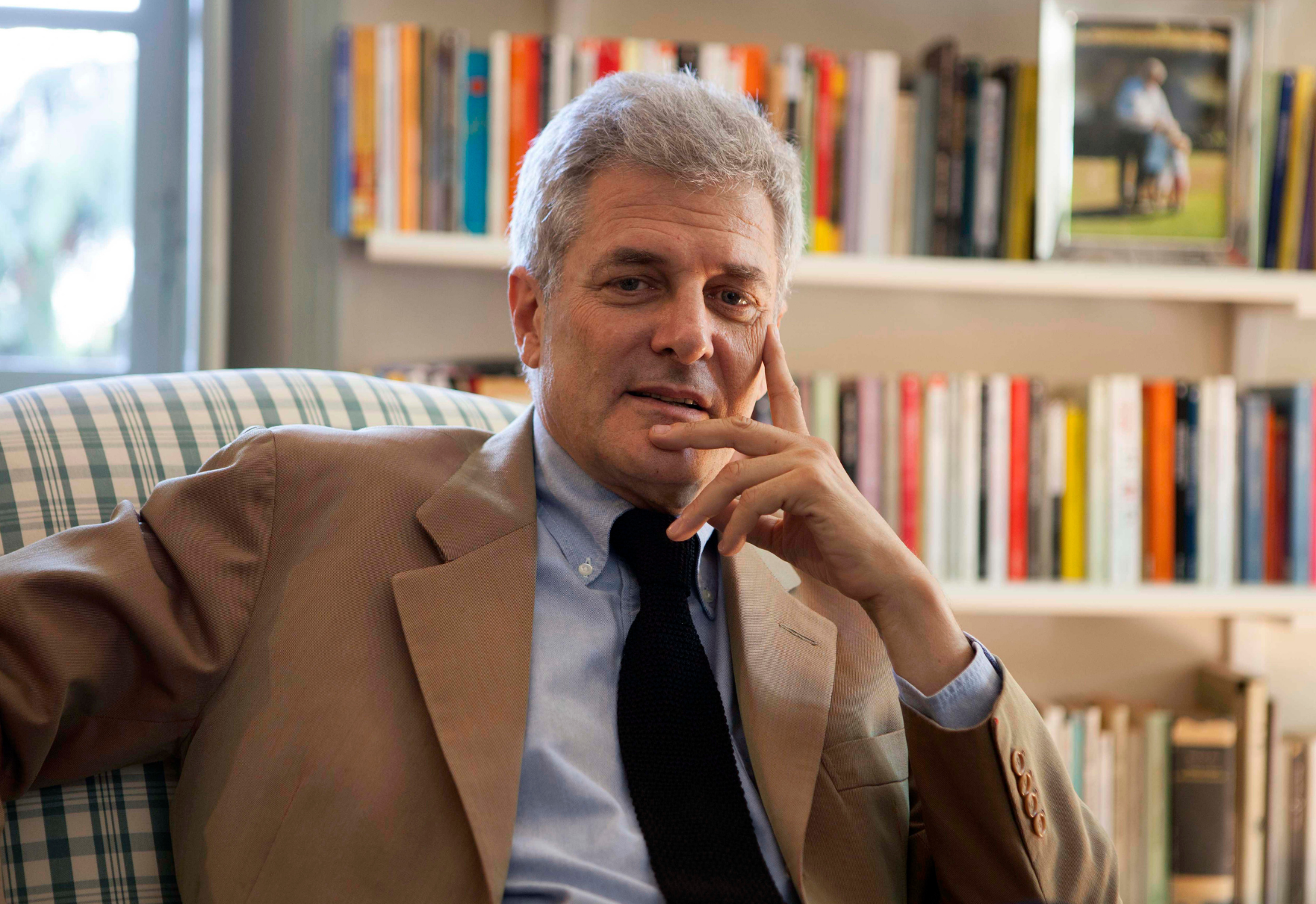
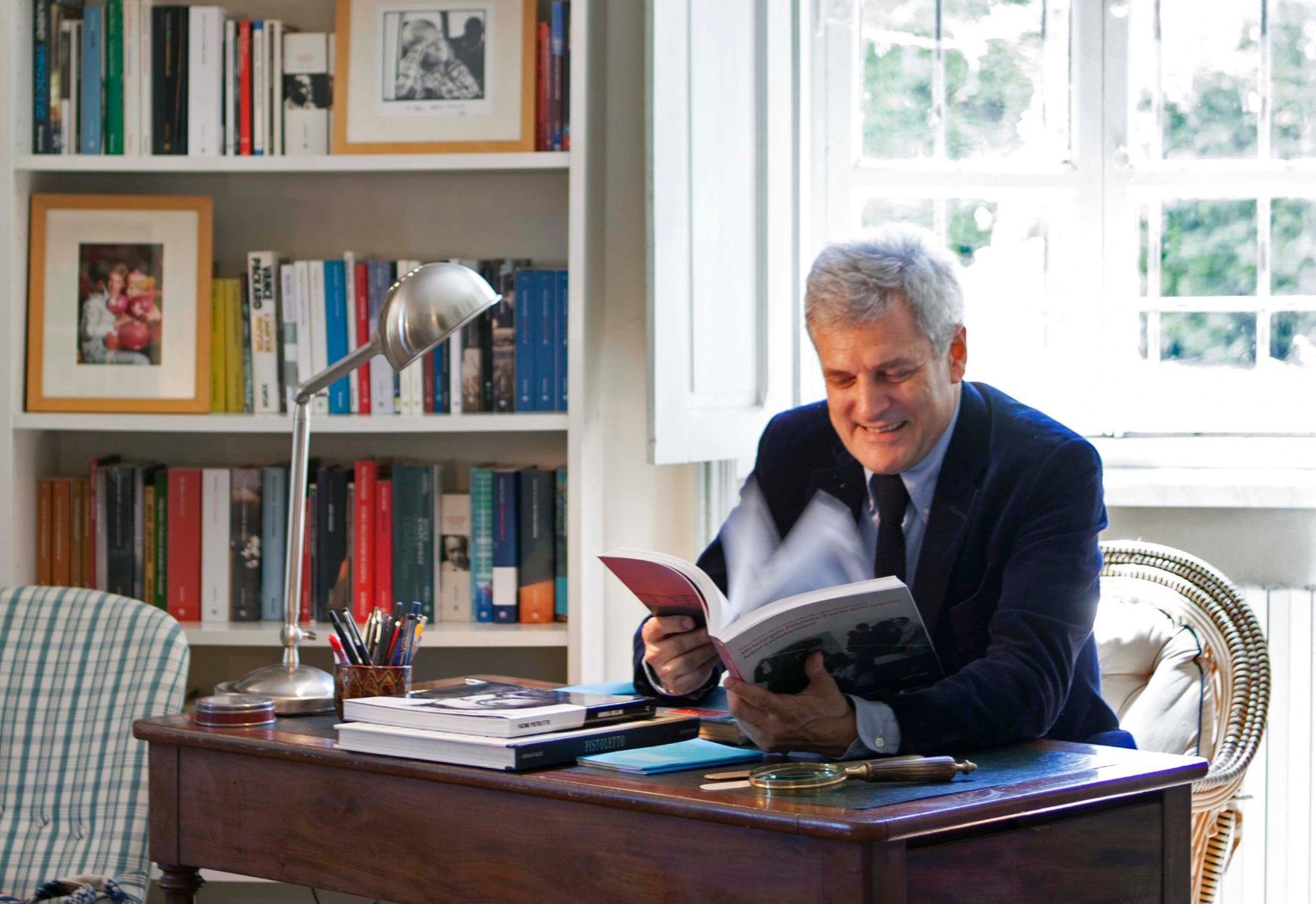
Alain Elkann’s home perfectly reflects the man: tastefully decorated in a way that doesn’t feel decorated at all, a quiet sophistication which is welcoming, not intimidating. An oversized antique wooden desk stands out in the corner, perfectly lined with small containers, each filled with a different kind of writing instrument — pens in one, markers in another, pencils in a third. Bronze accent pieces, mint green walls, burgundy upholstery. It is a room that has clearly been lived in, thought in, and written in.

Imagine
Photo Credit: Alain Elkann

Alain Elkann didn’t set out to be an interviewer. Until his forties, he was a fiction writer, writing short stories and novels, published in Italy, working as an editor, and running a literary magazine. The pivot came through friendship with the celebrated Italian writer Alberto Moravia. When a French publisher suggested the two collaborate on a book about Moravia’s life, they began taping long conversations wherever their paths crossed.


Moravia died on the day the book, Life of Moravia, was finally published. It became, in effect, his testament. “It was a huge success,” Elkann recalls. Because of it, a small Italian television channel asked him to interview Umberto Eco,  and after that, one thing simply led to another. A weekly television program, years of conversations with journalist Indro Montanelli, teaching posts at Oxford and the University of Pennsylvania, a newsletter now reaching readers in the Philippines, Russia, Brazil, and China. He never planned any of it. I sense that is exactly how he likes it.


As an interviewer, he is precise. He studies the person across from him carefully beforehand, sometimes prepares questions, but holds them loosely. The key, he says, is not being attached to your questions; if the person suddenly opens up about something unexpected, that is where the real interview lives. “You have to keep going with the direction they take you. It’s like a trip — you have an idea, maybe, but you don’t know how it’s going to end.”

 “You have to keep going with the direction they take you. It’s like a trip — you have an idea, maybe, but you don’t know how it’s going to end.”

He never changes what someone says; their words stay exactly as spoken. He may edit his own questions or cut something for length, but always shows the interviewee what has been removed. “My type of interview is to let people talk.” He sees himself as a guide, never using the conversation to demonstrate his own knowledge. “You don’t have to feel inferior because he is a king or a great Nobel Prize winner. You have to talk on the same level. Everyone has their role — your role, the interviewer, and that person, whoever they are, they’re the protagonists.”


His archive now runs to several hundred interviews — all published, many of them compiled in books by Assouline. He has interviewed Bianca Jagger, Michelangelo Pistoletto, and Prince Hassan of Jordan. He nearly interviewed Mother Teresa, but she passed away before he had the chance. He describes building the series by starting with one significant figure in a field, then using that conversation to open the next door. He sees it as something lasting — a primary source for future biographers and historians. These are the subject’s own words, he points out. Anyone who wants to write seriously about these people will eventually have to refer to these interviews.


Writing remains a near-sacred subject to Alain. He still writes by hand, keeps diaries, and visits stationery shops for the pleasure of good paper and ink. He is pragmatic about the impact of technology. To him, AI is a tool, a resource, , like a car or a plane; you don’t fight it, you use it. But he is firm that literature, poetry, and music are necessary, vital. “By reading books, you can have thousands of lives. If you had never read Tolstoy or Dostoyevsky, your life cannot be the same.” To young writers worried about AI, his advice is direct: if writing is something you are compelled to do, you will do it regardless. He recalls what Herbert von Karajan,  the legendary Austrian conductor who led the Berlin Philharmonic for 35 years, once told a young Pavarotti and Mirella Freni, the celebrated Italian soprano, when they asked when the money would come: “You sing well, and you will see that money will come.”

Imagine
Photo Credit: Alain Elkann
Imagine
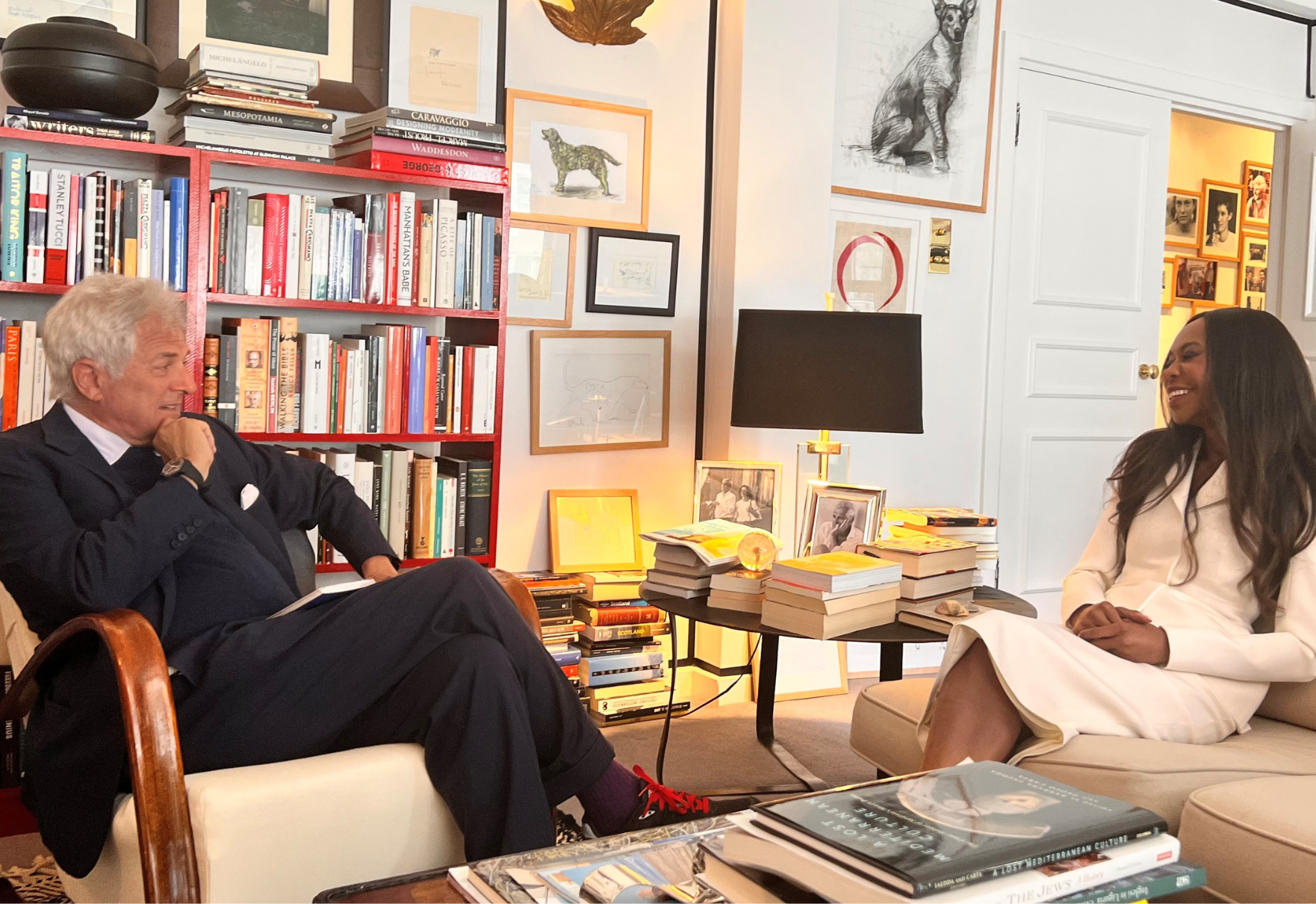
Photo Credit: Alain Elkann with Dambisa Moyo

“Young man, remember,  never, never bend your knees. Don’t give up. Don’t be more humble than you need to be.” 

He returns repeatedly to a word he says has grown in importance with age: gratitude. “It’s a wonderful thing to make a living by learning. It’s like going to school every week with a very good professor. And, you make a living — so how can I not be grateful?” And to common sense — not grand gestures, not ideology, but the instinct to stay balanced, to know the difference between drama and inconvenience. It is the philosophy, you think, of someone who has found the right city for it. And the advice that has stayed with him longest came not from a writer but from Menachem Begin, former Prime Minister of Israel, who knew his father and met Elkann as a small child. He leaned down and said, “Young man, remember,  never, never bend your knees. Don’t give up. Don’t be more humble than you need to be.” He told his own children the same thing.


Alain Elkann’s interviews are published at alainelkanninterviews.com.


His latest book of compiled interviews is available through Assouline.

Add to Calendar

Select the date to be saved in your Google calendar.

calendar placeholder

Done!

Event removed from your CoolAgenda.

Yeah!

Event Saved to your CoolAgenda

Add to CoolAgenda

In your CoolAgenda

Date

Title

Location

Description

calendar placeholder

Reset password

Password was reset

Your password has been reset successfully. You can now log in with your new password.

Check your Inbox

We’ve sent you a password reset email to the address provided. Please check your inbox and/or spam folder.

Forgot your password?

Thank you!

Please check your inbox for a verification email to complete your sign-up.

Sign Up

Create your Account and Culture Up!