Small Talk, Big Inspiration: In Conversation with Laurence Levrat-Pictet

by Donna Adiri

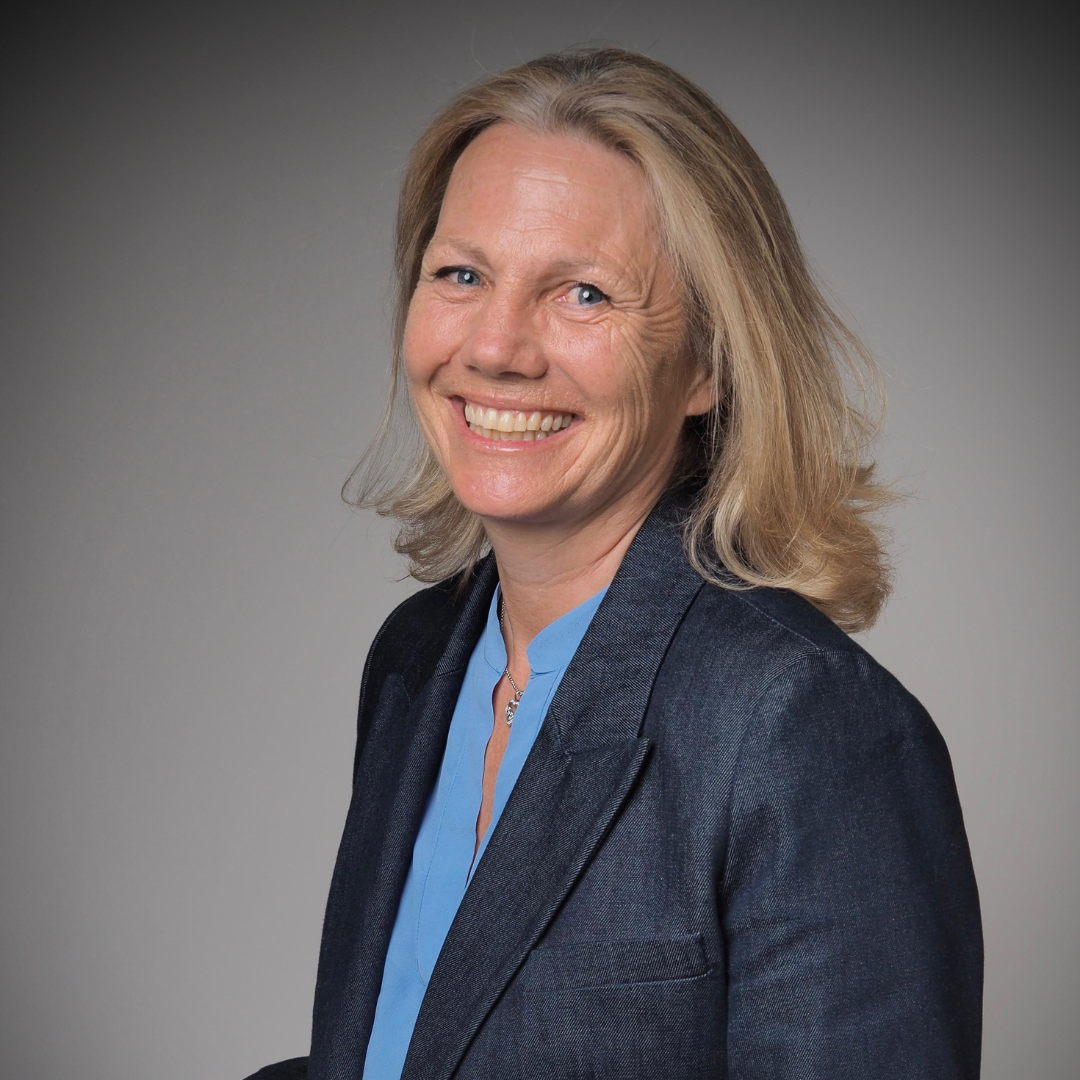
Laurence Levrat-Pictet
Photo Credit: Ian Prince

Small Talk, Big Inspiration: In Conversation with Laurence Levrat-Pictet

by Donna Adiri

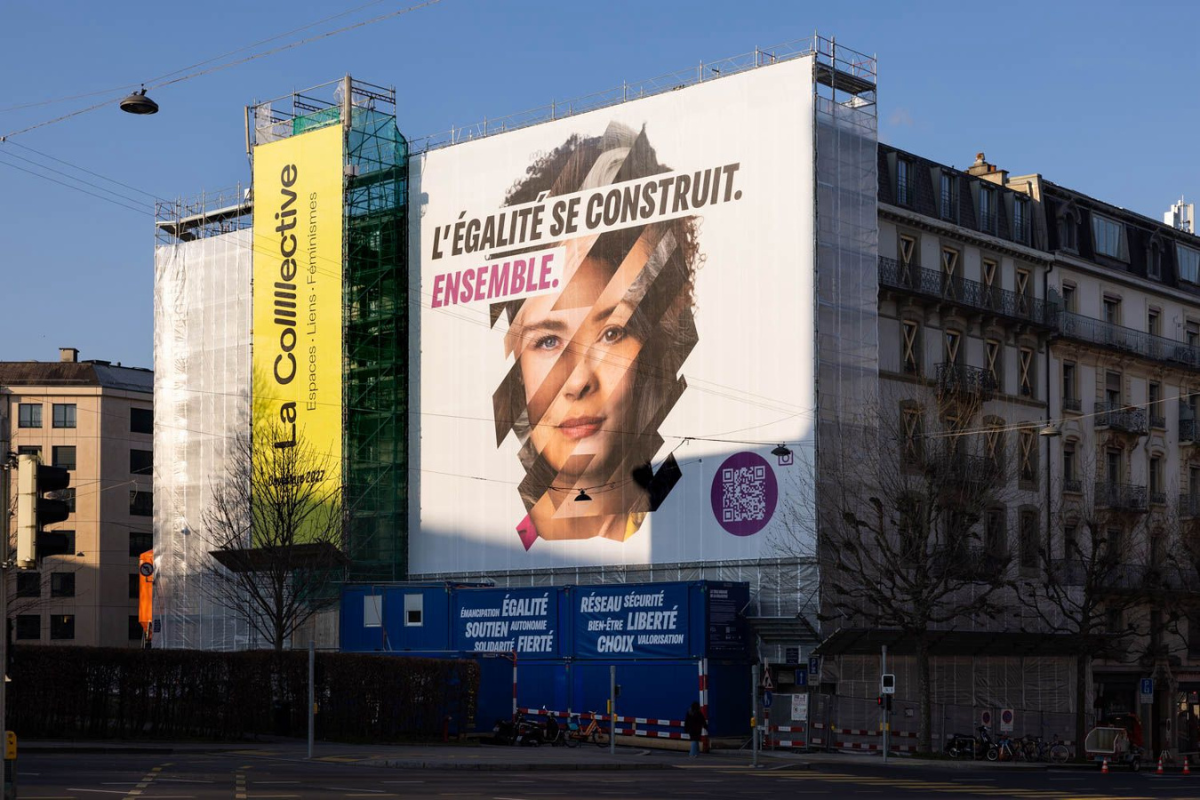
If you’ve walked along the boulevard des Philosophes recently, you may have paused in front of number 20, wondering about the banner stretched across the facade: “Equality is built. Together. La Collective will open its doors in 2027— a space bringing together seven women’s associations, a café, a library, housing, childcare, and cultural life under one roof. One of the women behind it, Laurence Levrat-Pictet, has spent a lifetime making things like this happen. I went to find out how.


On a rainy Geneva afternoon, I arrive slightly breathless at Oh Martine!, the café just outside the Gare Cornavin, having run between buses. Laurence is already there, and before I have even taken off my coat, she is at the counter getting me a flat white, smiling warmly, ready to talk. An hour later, I leave thinking: Can you just be my personal mentor? The feeling stays with me on the bus home and through every line I write about her. Over more than two decades, she has moved between humanitarian fieldwork, organisational development, education, and philanthropy — always asking the same question: what needs to be done, and who needs to be brought in to make it happen?


“There are no foreigners, only new friends to meet.”

Laurence’s story begins far from Geneva. Early in her career, she worked with the International Committee of the Red Cross (ICRC) in Congo and Bosnia, then spent nearly a decade at the World Young Women’s Christian Association (YWCA), one of the oldest organisations dedicated to women’s leadership, before moving on to Médecins Sans Frontières (MSF). Those years immersed her in intense human realities—experiences both powerful and demanding—that sharpened her understanding of complexity and deepened her sense of what solidarity truly means. Working in Eastern Europe during times of political transition, supporting the creation and strengthening of local organisations, she arrived at a conviction that has never left her: lasting change can only come from within. It rests on local ownership, on recognising the knowledge and strengths already present on the ground. One simple lesson from those years continues to guide her daily: “There are no foreigners, only new friends to meet.”


When she returned to Geneva, she brought that same philosophy with her — and applied it to a very different landscape. Sixteen years ago, she co-created Booster-Bridge, a structure offering tailored support, training, and advice to social, cultural, humanitarian, and environmental organisations. The name says it all: boost the actors, build bridges between them. She had noticed a recurring pattern — associations with wonderful ideas and insufficient structure to realise them, donor foundations eager to help but needing to see results emerge from intention. Booster-Bridge can help close that gap.

Imagine
Photo Credit: Rebecca Bowring

The challenges she encounters are consistent. Governance, above all, is the clear distribution of roles and responsibilities between members, volunteers, and paid staff. Without it, decision-making falters, tensions build, and good people burn out. The other major recurring roadblock is the inability to think long-term. Too many organisations plan one year at a time and struggle to define where they want to be in five. That absence of strategic vision keeps teams in a permanent state of urgency, generous people running on empty. Her role is to offer concrete tools, always anchored in each organisation’s specific reality. The reference guide she co-authored on NGO and association management has been downloaded nearly 120,000 times — a figure that speaks for itself. Geneva’s philanthropic ecosystem, she is careful to point out, is genuinely remarkable, a high concentration of foundations, private patrons, and public support that enables a rich and diverse cultural life.


But abundance does not always translate evenly. Smaller, independent, and emerging organisations often continue to operate in precarious conditions, with fragmented short-term funding. Projects that are already established, already well-known, tend to attract support more easily than experimental or inclusive initiatives. “Geneva’s cultural scene does not lack quality — it sometimes lacks visibility.” The challenge, she says, is to ensure that resources reach a greater diversity of actors. That instinct for connection also led her to co-create the first Certificate of Advanced Studies (CAS) in cultural and musical project management at the Haute école de musique de Genève, a program born from a simple observation: musicians were extraordinarily well-trained artistically, but rarely prepared for the practical realities of building a project around their art. Organising a festival, structuring an association, applying for funding — these require skills that music school training does not cover. The CAS was designed to give artists exactly those tools, and to help them turn an artistic idea into something viable and lasting.

“Geneva’s cultural scene does not lack quality — it sometimes lacks visibility.”

Back on the boulevard des Philosophes, La Collective represents something larger than any single project. It has been in the making for more than ten years, driven by several associations with a shared conviction: together, they could respond more completely to the needs of women. than any of them could alone. The principle is not simply co-working but genuine pooling, shared governance, shared IT systems, and co-constructed services. A woman arriving for support at one association will be able to access others without starting over each time. This reduction of friction is, in itself, a form of care.


For anyone wanting to build something in Geneva — whether a cultural project, a foundation, or a social initiative, her advice is direct. “Don’t go at it alone. Build alliances early. Geneva can seem fragmented, but it is in reality a deeply relational ecosystem.” Be clear about your positioning: what do you specifically bring? The most common mistake, she says, is to focus almost entirely on the idea and neglect the structure, including governance, the financial model, and strategy. The idea is only the beginning.

Geneva has no shortage of ambition or resources. What it lacks, Laurence suggests, is the connective tissue, a space where civil society, culture, and impact can meet and grow together. La Collective, opening in 2027, is being built to be exactly that: a haven for women who need support, a locomotive for those ready to lead, and a long-needed hub at the heart of the city.


La Collective is set to open in early 2027. Laurence Levrat-Pictet’s practical guide to NGO and association management is freely available in both French and English at fondation-arcanum.ch/guide

Newsletter

Culture, curated weekly.

Add to Calendar

Select the date to be saved in your Google calendar.

calendar placeholder

Done!

Event removed from your CoolAgenda.

Yeah!

Event Saved to your CoolAgenda

Add to CoolAgenda

In your CoolAgenda

Date

Title

Location

Description

calendar placeholder

Reset password

Password was reset

Your password has been reset successfully. You can now log in with your new password.

Check your Inbox

We’ve sent you a password reset email to the address provided. Please check your inbox and/or spam folder.

Forgot your password?

Thank you!

Please check your inbox for a verification email to complete your sign-up.

Sign Up

Create your Account and Culture Up!