Geneva and the Ninth Art

by Donna Adiri

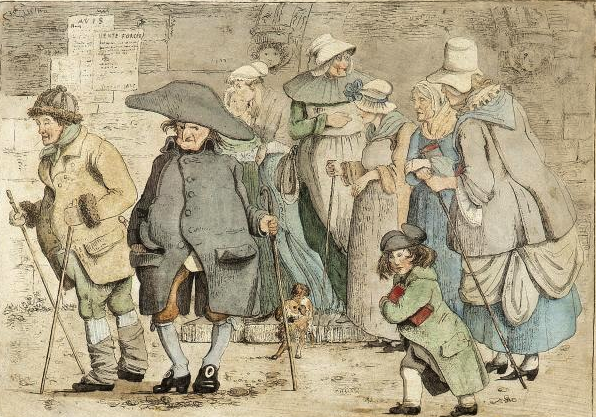
Photo Credit: Rodolphe Töpffer, “Scène de rue, n.d”, line engraving with watercolour, 14.0 x 20.2 cm. Courtesy of Collection Pictet

Geneva and the Ninth Art

by Donna Adiri

Geneva gave the world the Red Cross, the United Nations, and — as it turns out — the modern comic strip. It’s a part of the city’s identity that often gets overlooked, but from a 19th-century teacher sketching picture stories by the lake to a new comics museum in the works, Geneva’s relationship with the ninth art is deeper and more alive than most people realize.


What comes to mind when you hear the word cartoon? A Saturday-morning kids’ show, a picture book, a Disney character?


Yet cartoons aren’t a genre reserved for children — they’re a language. At their core, they are art: images designed to turn something complicated into something easy to understand. Playful or ruthless, tender or harsh, a cartoon can take the form of a comic strip, a political sketch, a caricature, or an animated story told frame by frame. Different formats, same power.
In school, one of my regular assignments was to find a political cartoon in the newspaper, cut it out, and bring it to class. It wasn’t just a shortcut to understanding current affairs; it was an exercise in interpretation — noticing the exaggerations, the symbols, the tiny details doing the heavy lifting. Even today, when I flip through The Economist or come across the Herrmann cartoons in the Tribune de Genève, I feel the same satisfaction: the recognition of a single image capturing the mood or the hypocrisy no one wants to talk about.


I grew up in the age of Peanuts, Garfield, For Better or Worse, and Dilbert — the kind of comic strips you read with your morning paper, eating cereal. It never occurred to me to wonder where any of it came from.  So I was genuinely surprised to discover that Geneva, the city I now call home, played a key role in the invention of modern comics, more than a century and a half before Schulz drew his first round-headed kid.

“So I was genuinely surprised to discover that Geneva, the city I now call home, played a key role in the invention of modern comics, more than a century and a half before Schulz drew his first round-headed kid.”

Imagine
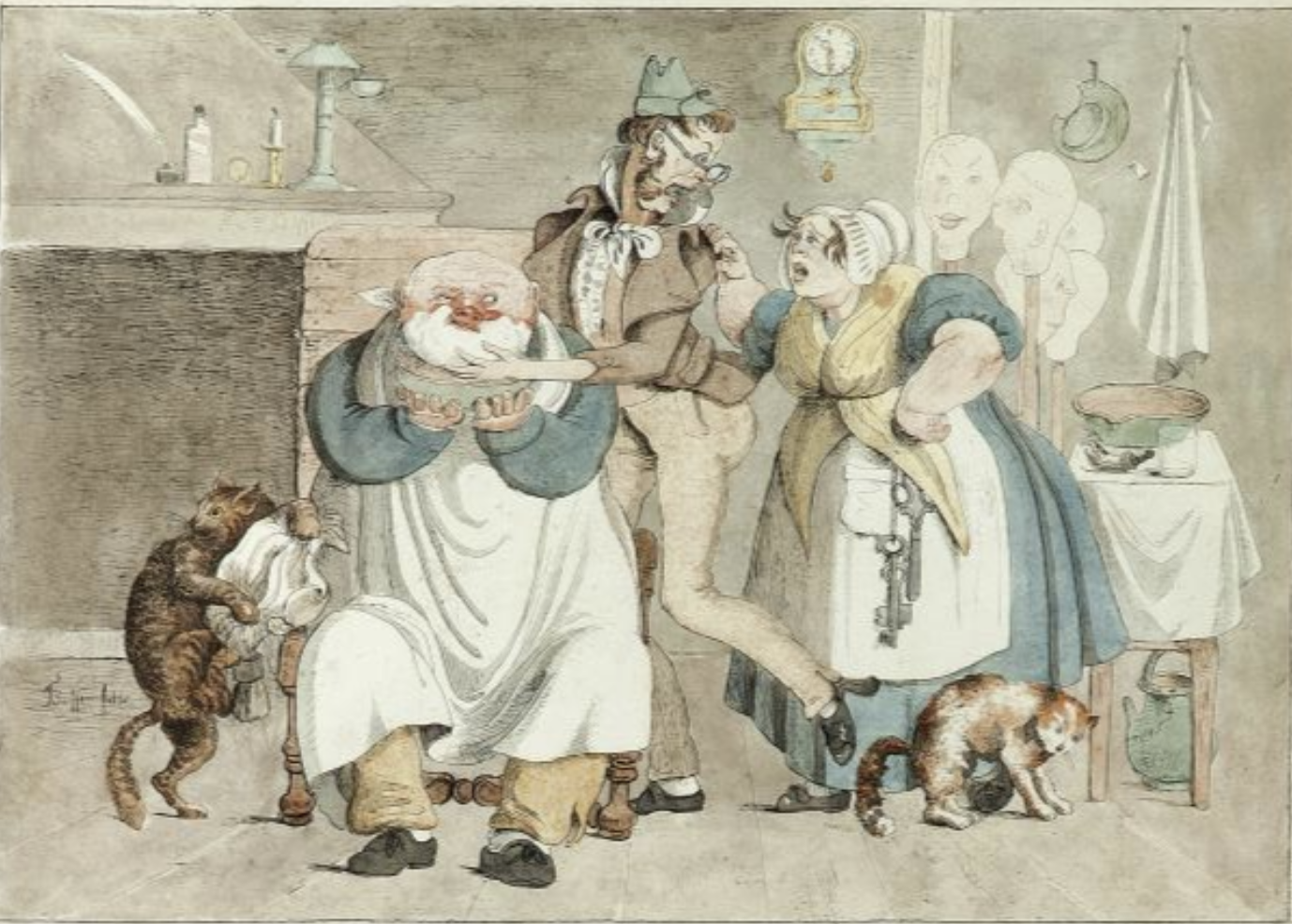
Photo Credit: Rodolphe Töpffer, Chez le Barbier, n.d., line engraving with watercolour, 16.0 x 22.7 cm. Courtesy of Collection Pictet
Imagine
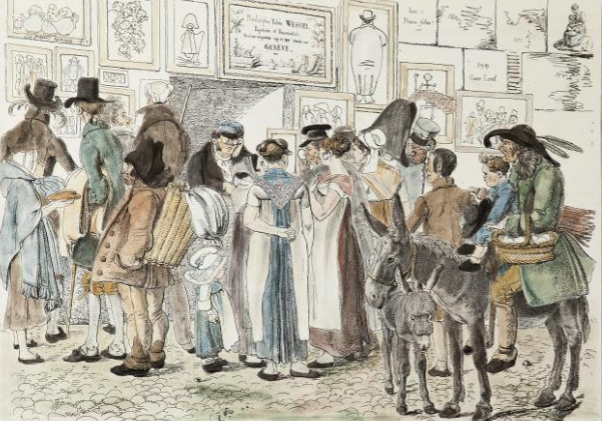
Photo Credit: Wolfgang-Adam Töpffer, Le Magasin d’estampes, n.d., etching with watercolour, 23.0 × 32.5 cm. Courtesy of Collection Pictet

The story begins with Rodolphe Töpffer, a Genevan teacher, writer, and caricaturist widely considered the father of the modern comic strip. His illustrated narratives — sequential panels accompanied by captions — created the storytelling structure that would become the foundation of the medium. His earliest work, Histoire de Mr Vieux Bois (completed in 1827, published in 1837), was translated internationally and influenced generations of artists. His father, Wolfgang-Adam, had already been producing political caricatures in Geneva a decade earlier. Together, they helped establish the city as an early center for visual satire and narrative illustration.


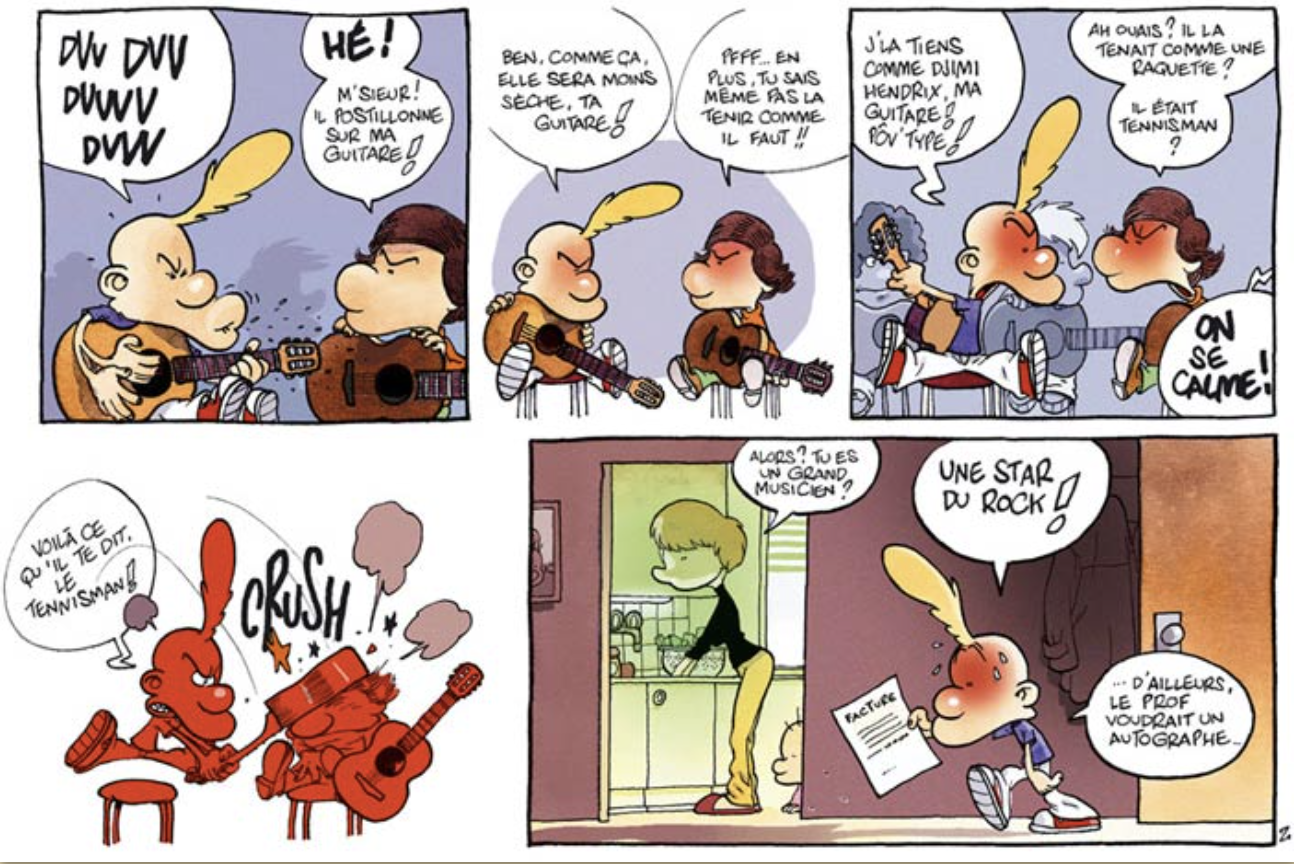
One of the most globally recognized Genevan cartoonists of the modern era is Philippe Chappuis, known as Zep (1967, Onex). His creation Titeuf — a spiky-haired, perpetually bewildered boy navigating childhood and questions far too large for him — debuted in 1992 and became one of the best-selling Franco-Belgian comic series of all time, with over 35 million albums sold in more than 25 languages. Zep brought Geneva back onto the world map of comics not just as a place of birth, but as a place still actively producing work that goes far beyond Switzerland.

Imagine
Photo Credit: Artwork © Zep — via Lambiek Comiclopedia (lambiek.net)
Imagine
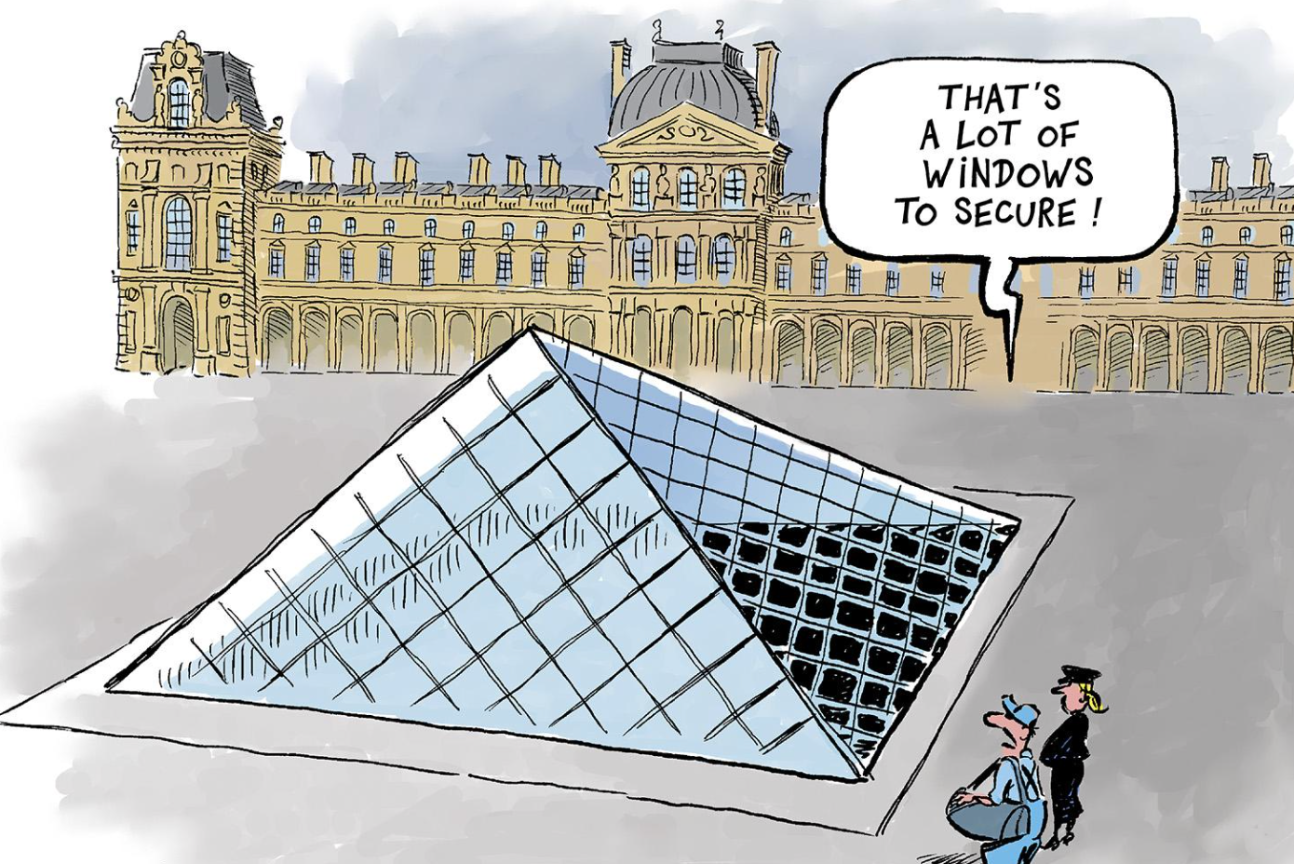
Photo Credit: Chappatte in Le Canard Enchaîné, France

“Zep brought Geneva back onto the world map of comics not just as a place of birth, but as a place still actively producing work that goes far beyond Switzerland.”

Equally known on the international stage is Patrick Chappatte. Raised in Geneva and long associated with the city, he built a remarkable career as an editorial cartoonist for some of the world’s most influential publications — including the New York Times, Le Monde, and Le Temps. Where Zep works in the world of the album, Chappatte shines in the noise of the daily news, using a single image to cut through political complexity. He has also pioneered documentary comics, using the form to report from conflict zones and bear witness to human rights abuses.


In the twenty-first century, Geneva’s relationship with cartooning took on a new dimension, connecting directly to its identity as a global hub for human rights and diplomacy. Cartooning for Peace emerged from a 2006 meeting between Kofi Annan and French cartoonist Plantu, with the aim of bringing together cartoonists worldwide to promote freedom of expression through satire. The Swiss foundation was established in Geneva in 2010, with support from the Swiss Federal Department of Foreign Affairs and the UN Office at Geneva. Today, it connects more than 370 press cartoonists, including Chappatte, across nearly 80 countries.  


It is no surprise, then, that Geneva is building a museum to celebrate this art form. The Canton, the municipality of Grand-Saconnex, and AMBDI (Association pour un Musée de la Bande Dessinée et de l’Illustration) have been pushing this project for years and incorporated the Fondation du Musée de la bande dessinée. I was lucky enough to speak with Christian Pirker, chairman of the foundation,  whose impressive background spans both law and art history, and who put it simply: “a city that historically pioneered cartooning, with a rich ecosystem that has been in place for decades in this field and has a dedicated higher-education school in comics and illustration should absolutely have a museum to showcase that legacy and its pride in the ninth art.”

“A city that historically pioneered cartooning, with a rich ecosystem that has been in place for decades in this field and has a dedicated higher-education school in comics and illustration, should absolutely have a museum to showcase that legacy and its pride in the ninth art.”

Recently, at Art Genève this past January, the Foundation of the Museum asked: Can comics be collected like modern or contemporary art? When we think about comic books, we tend to think about the album — the printed & bound object. But what about the original sketch? Is Hergé’s first drawing of Tintin a work of art? Can it be displayed, bought, sold, treasured? Many people haven’t thought about it that way — and that was exactly the point. It’s a conversation about how this art form has evolved from a less recognized medium into something sophisticated, valuable, still popular, and enjoyed by people of all ages.


The influence of cartooning in Geneva extends well beyond the museum itself. For its 50th anniversary in 2026, the Fondation pour Genève is publishing a comic book illustrated by Fabian Menor, a young Genevan cartoonist, using a fictional story about artificial intelligence to explore Geneva’s unique role in international cooperation. A fittingly modern chapter in a very long story.


From 19th-century lithographs to diplomacy and AI, Geneva has never stopped telling its story through pictures. The museum’s opening will take place following a major renovation and transformation of Villa Sarasin, which is set to begin in the coming months, but the excitement is already evident today. Here are a few ways to explore it:


  • The Geneva Book Fair (Salon du livre) — Held every year in late March, the second largest French-language book fair in the world draws over 100,000 visitors across five days, with comics and illustration always well represented.


  • The Bibliothèque de Genève — Holds original Töpffer manuscripts. There is no better place to trace the origins of the comic strip than here.


  • Galerie Papiers Gras — The essential stop for any comics lover in Geneva. Tucked on the first floor of an old building on Place de l’Île, this bookshop-gallery has been a fixture since 1987, with an eclectic selection of bande dessinée, rotating exhibitions of original artwork, and a view over the Rhône that makes it hard to leave.


  • The Prix Töpffer — Each December, Geneva awards the Prix Töpffer across three categories: international comics, local Genevan work, and an emerging artist prize for creators aged 15 to 30. Open to the public at HEAD, Geneva’s university of art and design.


  • A comic book about International Geneva — Coming autumn 2026, the Fondation pour Genève marks its 50th anniversary with a comic illustrated by Fabian Menor, using a story about AI to explore Geneva’s role on the world stage. It will be available in four languages.

Add to Calendar

Select the date to be saved in your Google calendar.

calendar placeholder

Done!

Event removed from your CoolAgenda.

Yeah!

Event Saved to your CoolAgenda

Add to CoolAgenda

In your CoolAgenda

Reset password

Password was reset

Your password has been reset successfully. You can now log in with your new password.

Check your Inbox

We’ve sent you a password reset email to the address provided. Please check your inbox and/or spam folder.

Forgot your password?

Thank you!

Please check your inbox for a verification email to complete your sign-up.

Sign Up

Create your Account and Culture Up!